
Website Templates for Winery Websites in the Pacific Northwest: A Web Designer’s Deep Dive
Choosing the right website template is one of the most important digital decisions a Pacific Northwest winery can make. The right template balances storytelling, compliance, e-commerce, and future growth—while reflecting the unique spirit of your vineyard.
Introduction: Why Winery Websites in the Pacific Northwest Deserve Special Attention
As a web designer specializing in winery and vineyard clients across the Pacific Northwest, I’ve had the privilege of collaborating with passionate winemakers from the rolling hills of Oregon’s Willamette Valley to the sun-drenched slopes of Washington’s Columbia Valley. The PNW wine scene is vibrant, innovative, and deeply rooted in a sense of place. Your website isn’t just a digital storefront—it’s your virtual tasting room, your brand ambassador, and often the first impression for wine lovers near and far.
But building a winery website in this region isn’t as simple as picking a pretty template and uploading a few bottle shots. The Pacific Northwest’s wine industry is fiercely competitive and uniquely regulated. Your website must tell your story, comply with state laws, sell wine online, manage club memberships, and book tastings—all while capturing the beauty and authenticity that sets your winery apart.
In this post, I’ll share everything I’ve learned about website templates for PNW wineries: the pros and cons, platform-by-platform breakdowns, pricing, scalability, and my own hard-won advice. Whether you’re a boutique vineyard launching your first site or an established winery considering a redesign, this guide is for you.
What Makes a Pacific Northwest Winery Website Different?
The Digital Needs of PNW Wineries
The Pacific Northwest is home to some of the most celebrated wine regions in North America: Washington’s Columbia Valley, Walla Walla, and Yakima Valley; Oregon’s Willamette Valley and Columbia Gorge. Each region has its own terroir, varietals, and community—but all share a commitment to authenticity, sustainability, and storytelling.
What does this mean for your website?
Your site must do more than list your wines. It should:
Showcase your story: Founder bios, vineyard history, and your connection to the land.
Feature stunning visuals: High-quality photography of vineyards, tasting rooms, and bottles.
Enable online sales: Seamless e-commerce for bottles, cases, and merchandise.
Manage wine clubs: Easy sign-up, member portals, and automated communications.
Book tastings and events: Real-time reservation systems for your tasting room or tours.
Promote events: Integrated calendars and online ticketing.
Educate and engage: Blog posts, wine education, food pairing guides.
Capture leads: Prominent mailing list sign-ups and contact forms.
Work flawlessly on mobile: Responsive design is non-negotiable.
Comply with regulations: Age verification, shipping restrictions, and state-specific rules
.
Compliance Considerations: Washington & Oregon
Washington State:
Must have WSLCB licensing for online sales.
Age verification is mandatory (age gates on site, ID at delivery).
Shipping restrictions and reporting requirements.
Employees serving wine need MAST permits
.
Oregon:
OLCC licensing required for DTC sales.
Age verification online and at delivery.
Compliance with OLCC and federal shipping rules
.
Ignoring these requirements can lead to fines or loss of license—so your template and platform must support compliance features out of the box or via integrations.
The Template Landscape: Platform-by-Platform Breakdown
Let’s explore the major website template platforms and the best winery-focused templates available for each. I’ll share real-world pricing, features, and my own recommendations based on years of working with PNW wineries.
WordPress: The Most Flexible and Scalable Option
Why I Recommend WordPress:
WordPress powers over 40% of the web for a reason. It’s endlessly customizable, supports powerful plugins (like WooCommerce for e-commerce), and offers a huge library of winery-specific themes. If you want a site that can grow with your business, WordPress is my top pick.
Top Winery Themes & Templates

E-commerce: WooCommerce is the go-to for wine sales, memberships, and wine clubs.
Why I Like It:
Deep customization—no two WordPress winery sites need look alike.
Plugins for everything: wine club management, event calendars, reservations, SEO, compliance.
Scalable: Start with a template, grow into a custom build as your needs evolve.
Potential Drawbacks:
Slightly steeper learning curve for beginners.
Plugin conflicts can occur if not managed carefully.
Requires ongoing updates and security monitoring.
Squarespace: Elegant, Easy, and Perfect for Small to Mid-Sized Wineries
Why I Recommend Squarespace:
Squarespace is a hosted platform known for its beautiful templates and ease of use. It’s ideal for wineries that want a professional site without the hassle of managing hosting or plugins.
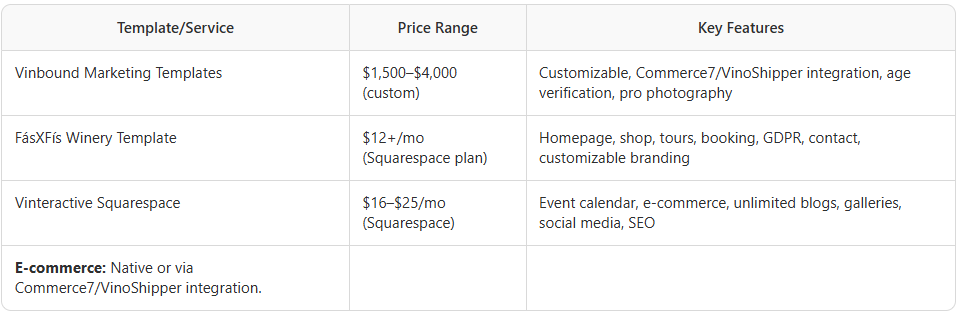
Winery-Focused Templates & Services
Why I Like It:
Visually stunning templates.
Drag-and-drop editing—no coding required.
Managed hosting, security, and backups.
Good for wineries with limited technical resources.
Potential Drawbacks:
Less flexible than WordPress for advanced features.
Smaller template library.
Some integrations (like advanced wine club tools) require third-party solutions.
Wix: Beginner-Friendly and Fast to Launch
Why I Recommend Wix:
Wix is a drag-and-drop website builder with a large template library, including several wine and vineyard options. It’s perfect for small wineries or those just starting out.
Winery Templates

Extremely easy to use.
Fast setup—can launch in a day.
Built-in SEO and analytics tools.
Potential Drawbacks:
Limited scalability for complex needs.
Less control over advanced features.
Not as robust for wine club management or compliance.
Shopify: The E-Commerce Powerhouse
Why I Recommend Shopify:
If your primary goal is to sell wine online, Shopify is hard to beat. It’s built for e-commerce, with robust product management, payment gateways, and subscription tools.
Winery Templates

Why I Like It:
Best-in-class e-commerce features.
Secure, reliable, and scalable.
App marketplace for added functionality.
Potential Drawbacks:
Less flexible for content-heavy or storytelling-focused sites.
Transaction fees and app costs can add up.
Requires third-party apps for reservations and events.
Webflow: For Design-Forward, Custom Experiences
Why I Recommend Webflow:
Webflow is a visual website builder with advanced design capabilities. It’s ideal for wineries that want a truly unique, interactive site and have access to a designer or developer.
Winery Templates

Export as CSV
Unmatched design freedom.
Modern, interactive features.
CMS for dynamic content.
Potential Drawbacks:
Steeper learning curve.
More expensive for e-commerce.
Best suited for wineries with in-house or agency support.
Showit: Visual Storytelling for Boutique Wineries
Why I Recommend Showit:
Showit is a drag-and-drop builder beloved by photographers and creatives. It’s perfect for boutique wineries that want a visually stunning, portfolio-style site.
Winery Templates

Why I Like It:
Full creative freedom—no coding required.
Gorgeous, image-driven templates.
Great for storytelling and brand immersion.
Potential Drawbacks:
Limited e-commerce and wine club features.
Not ideal for large or complex wineries.
Pros and Cons of Using Website Templates
The Pros
Lower Upfront Cost:
Template-based sites typically cost $0–$5,000 upfront, compared to $10,000–$50,000+ for custom builds. This is a game-changer for small and boutique wineries.
Fast to Launch:
Templates can be configured and launched in days or weeks, not months.
Built-in Mobile Responsiveness:
Modern templates are designed to look great on any device.
SEO-Friendly Structures:
Many templates include SEO tools and best practices out of the box.
Drag-and-Drop Editors:
Platforms like WordPress (with Elementor or Divi), Squarespace, and Wix empower non-technical staff to update content.
Pre-Built Integrations:
Many winery templates support Commerce7, WineDirect, or VinoShipper for e-commerce and wine club management.
Managed Hosting and Backups:
Squarespace, Wix, and Shopify handle hosting, security, and backups for you.
Industry-Specific Features:
Templates often include event calendars, reservation systems, galleries, and compliance tools.
The Cons
Limited Customization:
Templates can restrict your ability to fully express your brand or add unique features.
Risk of a Generic Look:
If many wineries use the same template, your site may not stand out.
Template Bloat:
Some templates include unnecessary features, slowing down your site.
Vendor Lock-In and Switching Costs:
Migrating from a template-based site to a custom build can be costly and complex.
Scalability Ceiling:
As your winery grows, you may outgrow your template’s capabilities.
Plugin Conflicts (WordPress):
Too many plugins can cause conflicts or slowdowns.
Transaction Fees (Shopify):
Shopify charges transaction fees unless you use their payment gateway.
Limited Wine Club Support (Some Platforms):
Not all platforms offer robust wine club management out of the box.
Important Features to Look for in a Winery Template
When evaluating templates, prioritize these features:

Scalability and Future-Proofing Your Winery Website
How Much Can You Grow with a Template-Based Site?
Templates are ideal for:
Small to medium wineries with standard needs.
Quick launches and limited budgets.
Sites focused on e-commerce, wine clubs, and events.
But there’s a ceiling:
Advanced features (custom loyalty programs, unique booking systems, deep CRM integration) may require custom development.
High-traffic wineries or those with complex catalogs may hit performance bottlenecks.
WordPress: The Most Scalable Template Option
Start with a theme like Divi or Lagar.
Add plugins as your needs grow (e.g., Commerce7, WineDirect, advanced SEO, analytics).
When you outgrow the template, transition to a custom build without losing your content or integrations.
Planning for the Future
Choose platforms that allow incremental customization.
Select integrations (Commerce7, WineDirect) that can scale with your business.
Budget for a potential redesign or migration as your winery grows.
Cost/Benefit: Template vs. Custom from Day One
Templates: Best ROI for small/boutique wineries. Get online fast, start selling, and build your brand.
Custom Builds: Worth the investment for larger wineries, those with complex needs, or those seeking a truly unique digital experience.
Pricing Summary and Value for Money

Hosting: $5–$30/month (WordPress), $12–$45/month (Squarespace/Wix), $39–$399/month (Shopify).
Maintenance: Included with hosted platforms; extra for WordPress.
Plugin/App Licenses: $0–$500/year depending on features.
E-commerce Fees: Shopify transaction fees, payment gateway fees, etc.
Where Templates Deliver the Best ROI:
Small and boutique wineries.
Wineries launching their first site or rebranding on a budget.
Those needing standard features and fast time-to-market.
When Custom Development Makes Sense:
Large wineries with complex needs.
Wineries seeking unique branding and advanced integrations.
Businesses planning for rapid growth or high transaction volumes.
My Personal Recommendations and Thoughts as a Web Designer
What I Recommend Most Often (and Why)
For most PNW wineries:
Start with a customized WordPress theme (Divi or Lagar are my favorites) paired with Commerce7 or WineDirect. This combo offers the best balance of flexibility, scalability, and wine industry-specific features.
For small/boutique wineries:
Squarespace or Wix can be a great fit—especially if you want a beautiful site with minimal fuss. Just be aware of the limitations if you plan to grow.
For e-commerce-first wineries:
Shopify is unbeatable for online sales and subscriptions, but less ideal for content-heavy or storytelling-focused sites.
For design-forward brands:
Webflow or Showit are fantastic if you have a designer on your team and want a truly unique, interactive site.
Don’t Sacrifice Storytelling for a Generic Look
Your winery’s story is your greatest asset. Don’t let a cookie-cutter template dilute your brand. Even with templates, invest in custom photography, compelling copy, and thoughtful design tweaks to make your site uniquely yours.
The Beauty vs. Performance Dilemma
Beautiful imagery is essential—but not at the expense of usability or speed. I’ve seen too many winery sites bogged down by massive photo galleries or slow-loading videos. Optimize images, prioritize page speed, and always test on mobile.
My Preferred Workflow
Discovery: Understand your winery’s story, goals, and digital needs.
Template Selection: Choose a flexible, well-supported theme.
Customization: Tailor the template with your branding, photography, and content.
Integration: Set up e-commerce (Commerce7, WineDirect), wine club tools, and reservation systems.
Launch & Training: Go live and train your team to manage updates.
Growth: As your winery grows, add features or transition to a custom build.
The Value of a Wine Industry-Savvy Designer
Work with someone who understands both web design and the unique compliance, marketing, and storytelling needs of wineries. This expertise can save you time, money, and headaches down the road.
Common Mistakes to Avoid
Cluttered pages and confusing navigation.
Slow loading times due to unoptimized images or bloated templates.
Missing e-commerce or booking functionality.
Inconsistent branding and outdated content.
Neglecting SEO and analytics.

The Right Template for Your Winery
Choosing the right website template is about more than aesthetics—it’s about aligning your digital presence with your winery’s goals, story, and growth plans. For most Pacific Northwest wineries, a well-chosen template offers the perfect blend of affordability, speed, and essential features. But as your business evolves, be ready to invest in custom solutions that set you apart.
If you’re ready to elevate your winery’s online presence—or just want to talk through your options—I’d love to help. Reach out for a consultation, and let’s craft a website that does justice to your wines, your story, and the incredible Pacific Northwest.
Ready to build a winery website that stands out?
Contact me for a free consultation and let’s bring your digital vision to life.
Thank you for reading! If you found this post helpful, please share it with other winery owners and industry friends. Cheers to your success in the Pacific Northwest wine world!
Let’s raise a glass to your success—both in wine and beyond! 🍷
As a web designer who specializes in the wine industry, I help wineries and vineyards create beautiful, effective websites and digital marketing strategies tailored to their unique stories and audiences. If you’re ready to boost your online presence and connect with new customers, let’s have a chat about how strategic & smart web design can take your winery to the next level!
Cheers to your success in the wine industry!
Maike
The Golden Square Design Studio
Where Vision Meets Innovation
Creating Stunning & Strategic Websites for Online Success