
Welcome, winery owners, vineyard managers, and wine industry professionals in the Pacific Northwest!
The Pacific Northwest wine industry is on the cusp of a digital renaissance. By embracing daring new web design trends—Motion Narrative, Glass Morphism, Creative Process, Archival Index, and Card Play—wineries can captivate modern audiences, stand out in a crowded market, and future-proof their brands.
Table of Contents
The Traditional Winery Website: Where We’re Coming From
Why Change? The Case for Daring Design
Trend #1: Motion Narrative
Trend #2: Glass Morphism
Trend #3: Creative Process
Trend #4: Archival Index
Trend #5: Card Play
Integrating the Trends: A Blueprint for Pacific Northwest Wineries
Practical Steps: How to Get Started
Conclusion: Pouring the Future, One Pixel at a Time
The Pacific Northwest—home to Oregon’s Willamette Valley, Washington’s Columbia Valley, and the northern reaches of California’s wine country—has long been celebrated for its world-class wines and breathtaking landscapes. Yet, when it comes to digital presence, many wineries still cling to tradition: elegant but static layouts, sepia-toned photography, and a focus on heritage over innovation.
But the world is changing. Today’s wine lovers are digital natives who crave immersive experiences, seamless e-commerce, and stories that leap off the screen. As a web designer specializing in the wine industry, I’ve witnessed a seismic shift: wineries are ready to break the mold, daring to experiment with bold, contemporary web design trends that set them apart.
In this comprehensive guide, I’ll introduce you to five brand new website design trends—some a little daring, all transformative—that are redefining what it means to be a winery online in the Pacific Northwest.
We’ll explore:
Motion Narrative
Glass Morphism
Creative Process
Archival Index
Card Play
Each trend is more than a fleeting fad; it’s a strategic tool to engage visitors, tell your unique story, and drive business growth. Let’s uncork the future of winery web design.
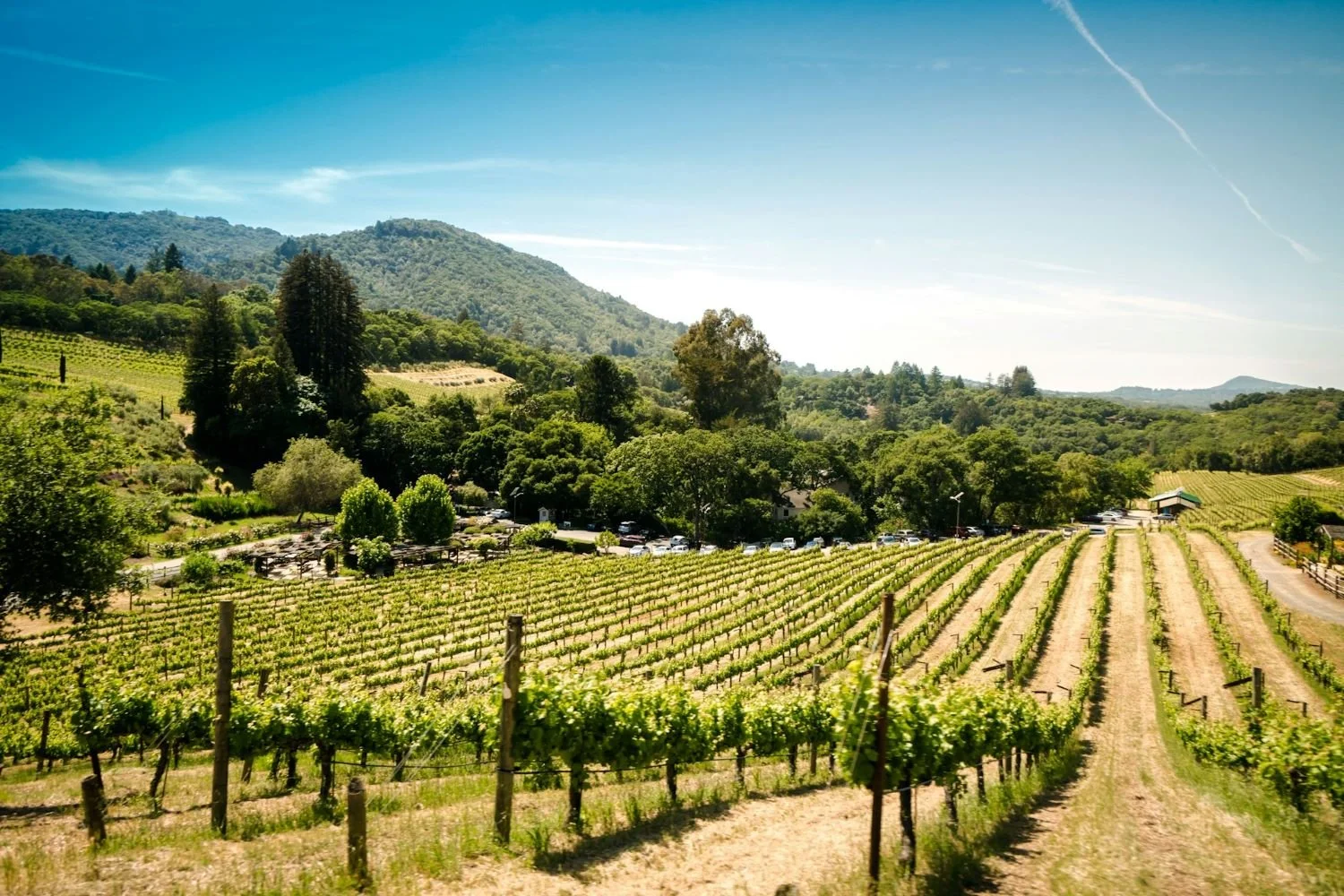
The Traditional Winery Website: Where We’re Coming From
Before we leap into the future, it’s important to understand the baseline. Pacific Northwest winery websites have historically shared several characteristics:
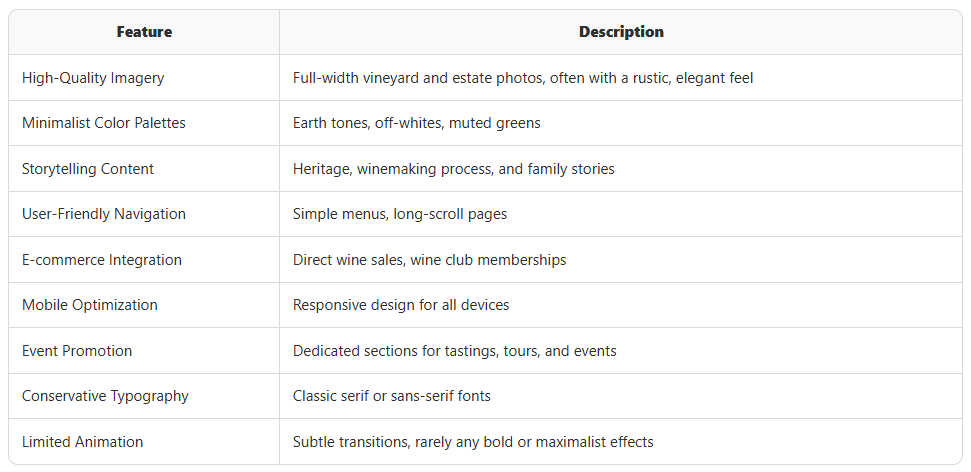
These elements have served wineries well, projecting authenticity and tradition. But as digital expectations evolve, so must the winery website.
Why Change? The Case for Daring Design
Key Finding:
Modern wine consumers expect more than static pages—they want immersive, interactive, and story-driven digital experiences.
The New Digital Wine Lover
Younger, tech-savvy audiences are discovering wine through Instagram, TikTok, and online tastings.
Direct-to-consumer sales are booming, with e-commerce and wine club memberships driving revenue.
Brand differentiation is critical in a crowded market—your website is often the first (and most lasting) impression.
The Opportunity
By embracing new web design trends, wineries can:
Stand out in a sea of sameness
Engage visitors with memorable, interactive experiences
Tell richer stories that connect emotionally
Drive sales with seamless, modern e-commerce
Future-proof their brand for the next generation of wine lovers
Let’s explore the five trends that are making waves—and how you can harness them.
Trend #1: Motion Narrative
What Is Motion Narrative?
Motion Narrative is the art of using purposeful animation and movement to guide visitors through your website’s story. It’s not about flashy gimmicks—it’s about creating a cinematic, immersive journey that brings your brand to life.
Key Features
Scroll-triggered animations: Content reveals, parallax effects, and transitions as users scroll
Kinetic typography: Animated headlines and text that draw attention
Micro-interactions: Subtle feedback when users click, hover, or interact
3D and depth-based motion: Layered visuals that create a sense of space and realism
Visual Examples
Airbnb’s 2026 Redesign: Navigation feels like a journey, with destinations unfolding through motion
Tesla’s Product Pages: 3D car renders respond to user gestures, making the experience tactile and engaging
How to Apply Motion Narrative to Winery Websites
Imagine a visitor landing on your homepage:
The screen gently fades in with a sunrise over your vineyard.
As they scroll, grape clusters “grow” along the page edges, and the story of your winery unfolds in animated chapters.
Hovering over a wine bottle triggers a subtle shimmer or a swirl of animated aroma notes.
The journey from vine to glass is told through a seamless, scroll-driven narrative—each section animated to evoke emotion and curiosity.
Technical Implementation
Tools: GSAP (GreenSock Animation Platform), Framer Motion, Lottie, WebGL, CSS/JS animations
Best Practices: Use motion to guide, not distract. Offer a “reduced motion” option for accessibility.
Why It’s Daring
Traditional winery sites are static and reserved. Motion Narrative introduces a sense of play, drama, and modernity—transforming your website from a brochure into an experience.
Trend #2: Glass Morphism
What Is Glass Morphism?
Glass Morphism is a visual trend that mimics the look of frosted, translucent glass. It’s characterized by blurred backgrounds, semi-transparent panels, and soft shadows—creating a layered, futuristic feel.
Key Features
Translucent overlays: Panels and cards that float above vibrant backgrounds
Blurred effects: Backgrounds softly out of focus, making content pop
Minimalist lines and gradients: Clean, modern, and elegant
Visual Examples
Spotify Wrapped: Uses glass-like overlays for stats and stories
Apple’s macOS Big Sur: System panels and menus with frosted glass effects
How to Apply Glass Morphism to Winery Websites
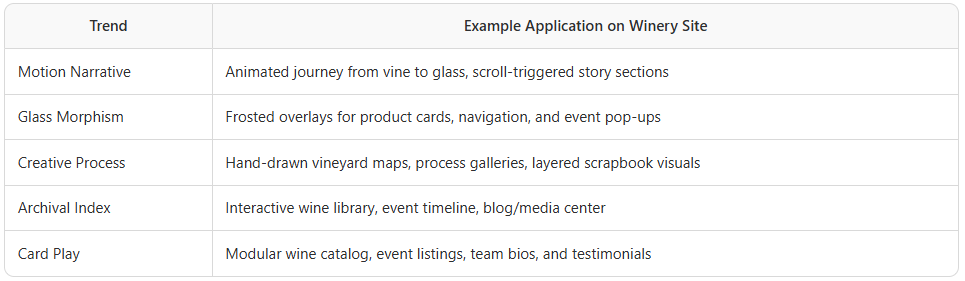
Product Cards: Wine bottles displayed on glassmorphic cards, with tasting notes and “Add to Cart” buttons floating above vineyard imagery
Navigation Menus: Semi-transparent menus that reveal the landscape behind
Event Pop-Ups: RSVP forms and event details on frosted panels, layered over atmospheric photos
Technical Implementation
CSS Properties:
backdrop-filter: blur(),background: rgba(), soft box-shadowsFrameworks: Tailwind CSS, Bootstrap, Figma for prototyping
Why It’s Daring
Glass Morphism is a bold departure from the earth-toned, opaque panels of traditional winery sites. It signals innovation, sophistication, and a willingness to embrace the future.
Trend #3: Creative Process
What Is the Creative Process Trend?
The Creative Process trend celebrates the artistry and humanity behind your brand. It’s about showing the “work in progress”—hand-drawn marks, scanned textures, collage-style layouts, and behind-the-scenes glimpses.
Key Features
Hand-drawn type and icons: Imperfect, organic, and personal
Layered visuals: Photos, sketches, and textures stacked like a scrapbook
Process galleries: Videos and images showing winemaking, harvest, and family moments
Visual Examples
Oranssi Template: Custom icons and layered visuals add a personal touch
Modern Portfolios: Designers showcase sketches, mood boards, and process videos
How to Apply Creative Process to Winery Websites
Winemaking Diaries: A section with scanned notebook pages, annotated photos, and candid videos of the team at work
Hand-Drawn Maps: Vineyard maps illustrated by hand, highlighting terroir and microclimates
Collage-Style Storytelling: Layered images of harvest, blending, and bottling, interspersed with handwritten notes and quotes
Technical Implementation
Design Tools: Adobe Photoshop/Illustrator, Figma, SVG/PNG for hand-drawn elements
Web Implementation: Layered image/text blocks, custom icons, CMS galleries
Why It’s Daring
Most winery sites are polished and impersonal. The Creative Process trend invites visitors behind the curtain, building trust and emotional connection through authenticity and vulnerability.
Trend #4: Archival Index
What Is Archival Index?
Archival Index reimagines how websites organize and present historical or reference content. Inspired by library archives and catalog systems, it emphasizes structure, discoverability, and a sense of legacy.
Key Features
Vertical or tabbed archive listings: Organized by timeline, category, or tags
Visual separation: Borders, distinct fonts, and color coding
Search and filter integration: Easy navigation of large content libraries
Metadata and thumbnails: Enhance discoverability and engagement
Visual Examples
Designing the News: Monthly and category-based archives with clear visual separation
Kyle Meyer’s Archives: Prominent “Archives” navigation, posts arranged by timeline
How to Apply Archival Index to Winery Websites
Wine Library: An interactive archive of past vintages, organized by year, varietal, and awards
Event History: A timeline of past tastings, festivals, and milestones, complete with photos and press clippings
Blog and Media Center: Tabbed navigation for recipes, news, and winemaker interviews
Technical Implementation
CMS Features: WordPress, Squarespace, or custom solutions for archives, categories, and tags
Custom Development: JavaScript tab-switchers, vertical timelines, search/filter functionality
Why It’s Daring
While most winery sites bury their history in static “About” pages, Archival Index makes your legacy a living, interactive part of the user experience—building credibility and deepening engagement.
Trend #5: Card Play
What Is Card Play?
Card Play is a modular design trend that breaks content into interactive, visually distinct cards. Each card acts as a tactile module, balancing structure and playfulness while enhancing navigation and user experience.
Key Features
Content chunked into cards: Images, text, icons, or links in modular blocks
Rounded corners and soft shadows: Depth and approachability
Micro-animations: Flips, scale, fade on hover for interactivity
Responsive grids: Mobile-friendly, scannable layouts
Visual Examples
Pinterest & Dribbble: Card-based layouts for browsing diverse content
Google Play, Airbnb: Cards for products, posts, or listings
How to Apply Card Play to Winery Websites
Wine Catalogs: Each wine as a card, with bottle image, tasting notes, and “Add to Cart” button
Event Listings: Upcoming tastings, dinners, and tours as interactive cards
Team Bios: Staff and winemaker profiles in a grid of cards, each with a photo and fun fact
Technical Implementation
CSS Grid/Flexbox: For responsive card layouts
No-Code Tools: Squarespace, Wix, Webflow for drag-and-drop card modules
JavaScript: For interactivity (flips, hover effects)
Why It’s Daring
Card Play brings a sense of playfulness and modernity, moving away from long, text-heavy pages to a more dynamic, engaging, and mobile-friendly experience.
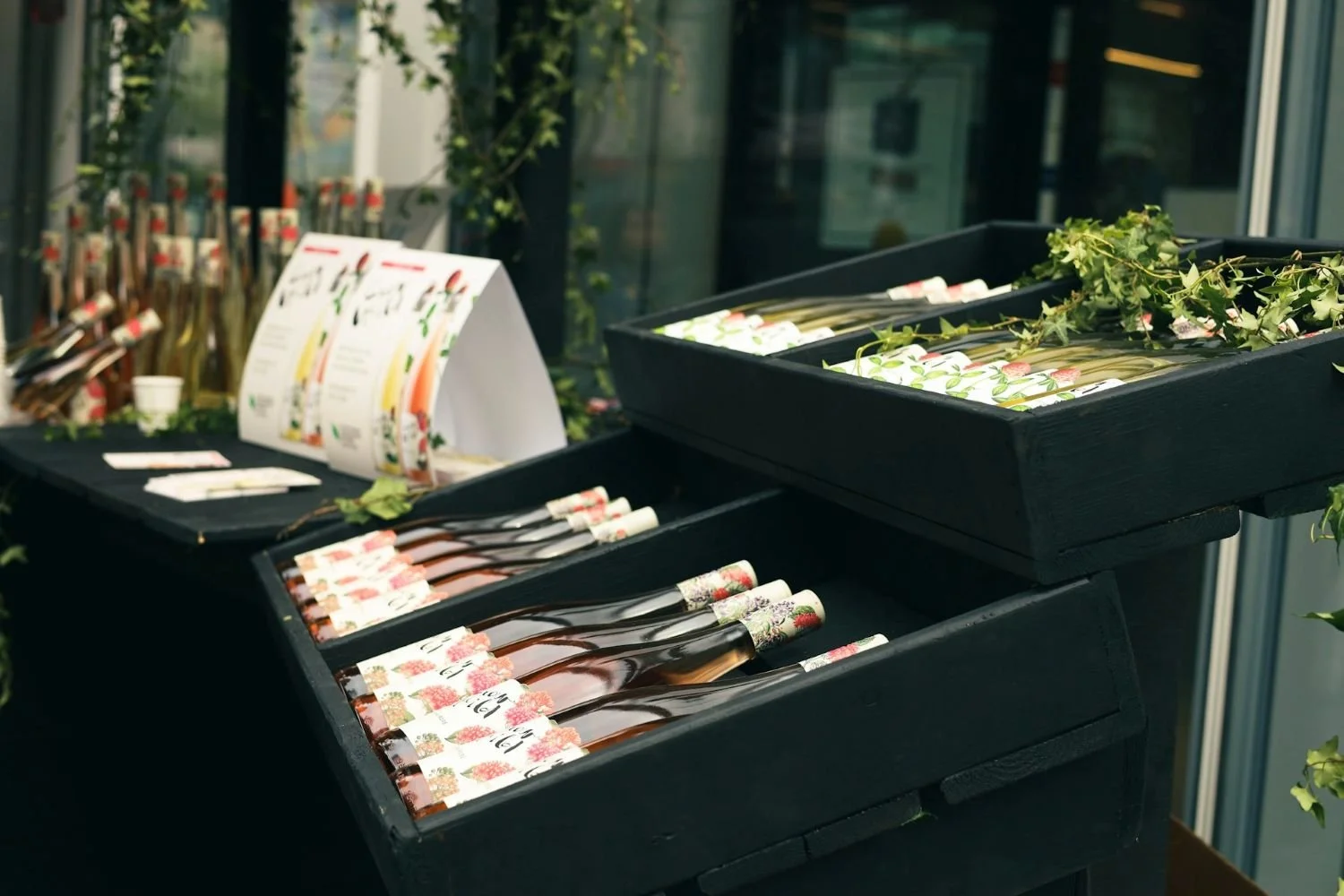
Integrating the Trends: A Blueprint for Pacific Northwest Wineries
Key Takeaway:
The real magic happens when these trends are thoughtfully combined, creating a website that is greater than the sum of its parts.
Sample Homepage Flow
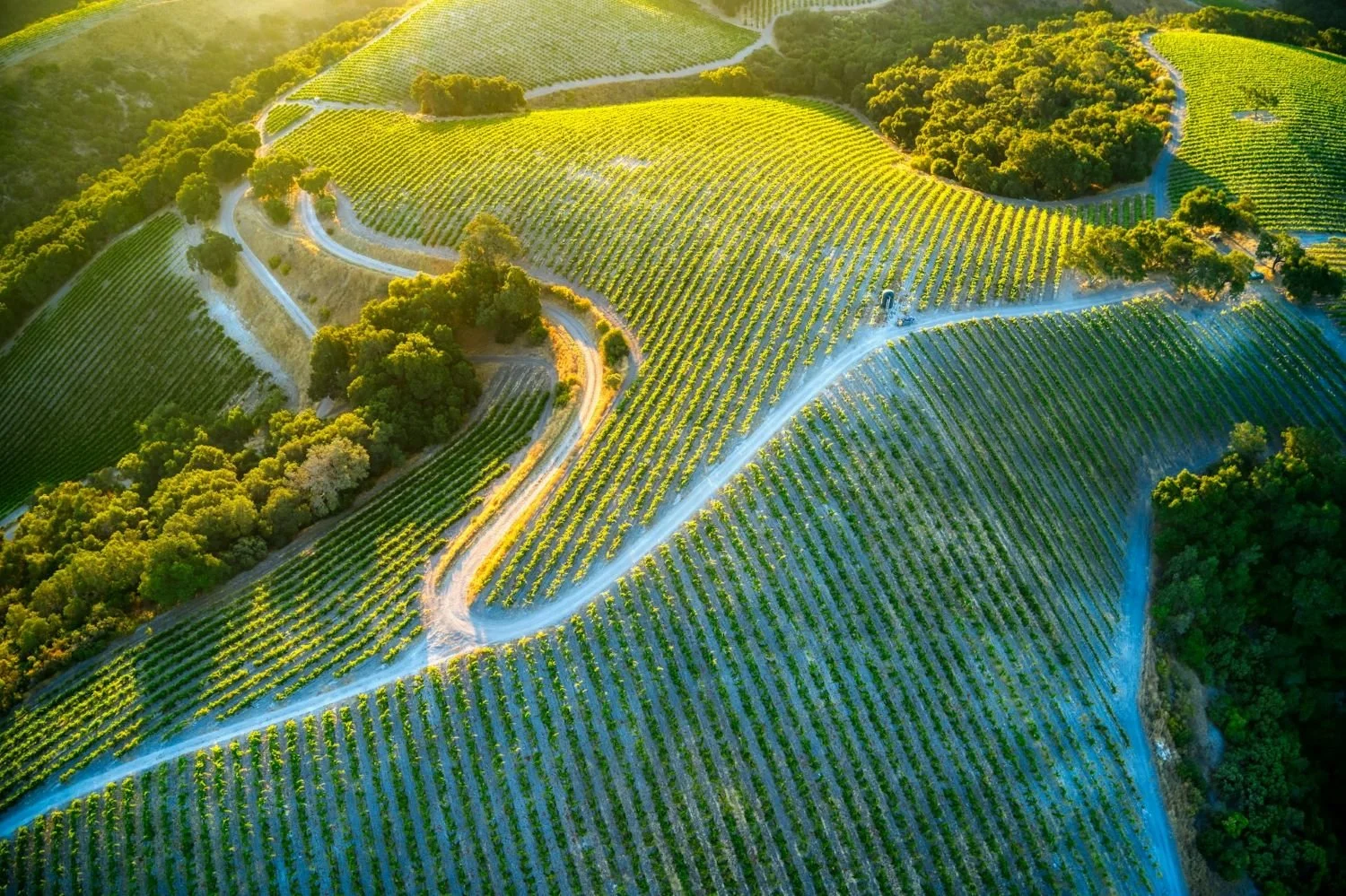
Motion Narrative: The homepage opens with a scroll-driven animation—a drone’s-eye view of the vineyard at sunrise, with kinetic headlines introducing your story.
Glass Morphism: Navigation and product cards float above the landscape, their frosted panels revealing glimpses of the vines behind.
Creative Process: As visitors scroll, they encounter hand-drawn maps, candid harvest photos, and winemaker notes layered like a digital scrapbook.
Archival Index: A “Wine Library” section lets users explore past vintages, awards, and event histories through a visually rich, filterable archive.
Card Play: The shop, events, and blog are presented as interactive cards—each inviting exploration, with micro-animations and clear calls to action.
Visual Example
Practical Steps: How to Get Started
1. Audit Your Current Website
Identify which traditional elements are working—and which feel outdated.
Gather feedback from customers: What do they love? What do they wish was different?
2. Define Your Brand Story
What makes your winery unique? Is it your terroir, your family history, your winemaking philosophy?
How can you tell this story visually and interactively?
3. Prioritize Trends That Fit Your Brand
Not every trend will suit every winery. Choose the ones that align with your identity and goals.
For example, a heritage-focused winery might lean into Archival Index and Creative Process, while a modern, experimental brand might embrace Motion Narrative and Glass Morphism.
4. Partner with a Specialist
Work with a web designer (like me!) who understands both the wine industry and cutting-edge web design.
Ensure your site is mobile-optimized, accessible, and e-commerce ready.
5. Test, Launch, and Iterate
Launch your new site in stages, gathering feedback and making improvements.
Use analytics to track engagement, sales, and user behavior.
Pouring the Future, One Pixel at a Time
The Pacific Northwest wine industry is defined by innovation, passion, and a deep respect for tradition. Your website should reflect these values—not by clinging to the past, but by daring to embrace the future.
By integrating Motion Narrative, Glass Morphism, Creative Process, Archival Index, and Card Play, you can create a digital experience that is as memorable and distinctive as your wines. These trends are not just about aesthetics—they’re about storytelling, engagement, and business growth.
Key Takeaway:
The wineries that thrive in the coming years will be those that dare to innovate online, captivating a new generation of wine lovers with immersive, interactive, and unforgettable digital experiences.
Ready to transform your winery’s website? Let’s raise a glass to bold design, rich stories, and a future as bright as a Willamette Valley Pinot at sunset.🍇🍷
Let’s raise a glass to your success—both in wine and beyond! 🍷
As a web designer who specializes in the wine industry, I help wineries and vineyards create beautiful, effective websites and digital marketing strategies tailored to their unique stories and audiences. If you’re ready to boost your online presence and connect with new customers, let’s have a chat about how strategic & smart web design can take your winery to the next level!
Cheers to your success in the wine industry!
Maike
The Golden Square Design Studio
Where Vision Meets Innovation
Creating Stunning & Strategic Websites for Online Success