
2026 Outlook: Wine & Website Design in the Pacific Northwest
Welcome, winery owners, vineyard managers, and wine industry professionals in the Pacific Northwest!
The Pacific Northwest wine industry is poised for growth in 2026, driven by sustainability, premiumization, and digital transformation. For wineries, a modern, accessible, and story-driven website is no longer optional—it's essential for capturing new markets, building loyalty, and standing out in a competitive landscape.
Table of Contents
Introduction: The Pacific Northwest Wine Scene in 2026
Wine Industry Trends: What’s Shaping 2026?
Market Growth & Premiumization
Sustainability as a Core Value
Consumer Behavior: Experience & Authenticity
Technological Adoption in the Vineyard & Beyond
The Digital Landscape: Why Your Website Matters More Than Ever
Conversion Optimization & E-Commerce
SEO & Local Search: Getting Found in a Crowded Market
Social Media & Virtual Experiences
Regulatory Compliance for Online Wine Sales
2026 Web Design Trends for Wineries
Personalization & AI-Driven Experiences
Minimalism, Storytelling, and Brand Expressiveness
Mobile-First & E-Commerce Features
Accessibility & Inclusive Design
Sustainable Web Design
Regional Focus: Pacific Northwest AVAs & Digital Differentiation
Oregon: Willamette Valley & Beyond
Washington: Columbia Valley & Sub-AVAs
Wine Tourism & Experiential Marketing
Competitive Digital Strategies
Practical Recommendations for Winery Websites in 2026
Conclusion: The Future Is Digital, Sustainable, and Story-Driven
Introduction: The Pacific Northwest Wine Scene in 2026
The Pacific Northwest—encompassing Oregon, Washington, parts of British Columbia and Idaho—has long been celebrated for its world-class wines, breathtaking landscapes, and innovative spirit.
As we look ahead to 2026, the region stands at the intersection of tradition and transformation. Wineries are not only producing exceptional Pinot Noir, Cabernet Sauvignon, and Chardonnay, but also leading the way in sustainability, digital engagement, and direct-to-consumer (DTC) sales.
As a web designer specializing in the wine industry, I’ve witnessed firsthand how the digital landscape is evolving. In 2026, your website is more than a digital brochure—it’s your tasting room, your storefront, and your brand ambassador.
This comprehensive outlook will explore the trends, challenges, and opportunities shaping wine and website design in the Pacific Northwest, offering actionable insights for winery owners, vineyards, and wine businesses ready to thrive in the digital age.
Wine Industry Trends: What’s Shaping 2026?
Market Growth & Premiumization
Despite global market fluctuations, the Pacific Northwest wine industry is expected to see robust growth in 2026, particularly in the premium and ultra-premium segments.
Consumers are increasingly willing to pay more for quality, authenticity, and sustainability. Oregon and Washington are leveraging their reputations for terroir-driven wines and environmental stewardship to capture new market segments and respond to shifting consumer demands.
Key Growth Segments:
Premium & Ultra-Premium Wines: Focus on quality, small-lot production, and unique AVA characteristics.
Direct-to-Consumer (DTC) Sales: Tasting rooms, wine clubs, and online sales are major growth drivers.
Wine Tourism: Events like Taste Washington and the Oregon Wine Symposium are drawing visitors for immersive experiences and culinary pairings.
Certified Sustainable Wines: Demand for certified sustainable wines is rising, with both states expanding certification programs and marketing efforts.
Sustainability as a Core Value
Sustainability is no longer a niche concern—it’s a core value for both producers and consumers. Washington’s Sustainable WA program and Oregon’s high rate of certified sustainable vineyards (47%) reflect a region-wide commitment to environmental, social, and economic responsibility.
Dual certifications (e.g., Sustainable WA + Salmon-Safe) are becoming the norm, emphasizing watershed protection and biodiversity.
Key Finding:
Sustainability is a major purchase driver, with consumers seeking transparency, environmental responsibility, and social equity in their wine choices.
Consumer Behavior: Experience & Authenticity
Today’s wine consumers crave authentic experiences—both in-person and online. They want to connect with the story behind the bottle, whether through curated tastings, vineyard tours, or engaging digital content. The shift toward digital engagement is accelerating, with seamless online purchasing, virtual tastings, and interactive winery websites now expected.
Consumer Priorities:
Authentic, story-driven interactions
Transparency in production and sustainability
Seamless digital experiences (from browsing to buying)
Personalized recommendations and content
Technological Adoption in the Vineyard & Beyond
Wineries are embracing technology to enhance both production and customer engagement:
E-commerce & CRM: Robust platforms support DTC sales and personalized marketing.
Virtual Experiences: Online tastings, interactive content, and virtual tours expand market reach.
Precision Viticulture: Data analytics, remote sensing, and automation improve resource management and grape quality.
Sustainability Tech: Monitoring water usage, soil health, and energy consumption supports certification and environmental goals.
The Digital Landscape: Why Your Website Matters More Than Ever
Conversion Optimization & E-Commerce
With over 70% of winery website traffic now coming from mobile devices, a frictionless, mobile-optimized e-commerce experience is essential. Common conversion barriers include complex checkout processes, lack of personalization, and unclear value propositions. Streamlining the path to purchase—through auto-filled forms, multiple payment options, and transparent shipping details—can significantly boost conversion rates.
Opportunities:
Frictionless checkout (one-tap, digital wallets)
Personalized recommendations (AI-driven)
Real-time booking for tastings/events
Wine club integration and flexible subscriptions
Loyalty programs and gamification
SEO & Local Search: Getting Found in a Crowded Market
The proliferation of wineries in the Pacific Northwest makes it challenging to stand out online. Effective SEO strategies are critical:
Local SEO: Target region-specific keywords (e.g., “best Dundee Hills wineries”), maintain Google Business Profiles, and generate local reviews.
Long-Tail Keywords: Capture ready-to-convert visitors with specific queries (e.g., “dog-friendly wineries in Walla Walla”).
Content Marketing: Regular blog posts, behind-the-scenes videos, and educational resources improve organic rankings and engage visitors.
Technical SEO: Fast, accessible, and mobile-optimized websites are rewarded by search engines and users alike.
Social Media & Virtual Experiences
Social media is a powerful tool for direct sales, brand building, and community engagement:
Direct Sales via Social Platforms: Instagram and Facebook offer integrated shopping features.
Influencer & User-Generated Content: Authenticity and reach are amplified through collaborations and customer stories.
Short-Form Video: Reels, TikToks, and live streams engage younger audiences and showcase winery stories.
Virtual Tastings & Hybrid Events: Online experiences expand reach and foster deeper customer connections.
Regulatory Compliance for Online Wine Sales
Navigating the complex landscape of online alcohol sales requires careful attention to compliance:
Shipping Restrictions: State-by-state regulations necessitate dynamic shipping logic.
Age Verification: Robust processes are mandatory to prevent underage sales.
Transparent Compliance Messaging: Clear communication about shipping limitations, taxes, and legal requirements is essential.
Solution:
Automated compliance tools and seamless integration into the checkout flow minimize friction and legal risk.
2026 Web Design Trends for Wineries
Personalization & AI-Driven Experiences
AI-powered personalization is transforming winery websites. By leveraging user data, wineries can deliver tailored product recommendations, content, and navigation flows. Virtual personas and AI-driven feedback loops help optimize the site for diverse customer journeys.
Examples:
Personalized wine suggestions based on browsing and purchase history
Curated tasting experiences and event recommendations
Dynamic content that adapts to user preferences
Minimalism, Storytelling, and Brand Expressiveness
Minimalist design—with clean layouts, generous white space, and high-quality imagery—remains dominant. Storytelling is woven into the design, using immersive visuals and micro-interactions to convey brand heritage and the winemaking process.Brand Expressiveness:
Unique color palettes and custom typography (including variable fonts)
Hand-drawn elements and organic shapes reflecting artisanal values
Sustainability messaging integrated into the visual identity
Mobile-First & E-Commerce Features
Mobile-first design is the default in 2026. Responsive layouts, optimized navigation, and large, tappable buttons ensure seamless experiences across devices. E-commerce features are sophisticated:
One-tap checkout and digital wallets (Apple Pay, Google Pay)
Advanced filtering and AI-powered search
Wine club integration, loyalty widgets, and flexible payment options
Guest checkout and minimal form fields to reduce friction
Accessibility & Inclusive Design
Accessibility is a fundamental principle, not just a trend. Compliance with WCAG 2.2+ is expected, with features like screen reader compatibility, keyboard navigation, high-contrast modes, and alternative text for images.
Inclusive Design Practices:
On-page accessibility controls (font size, contrast, screen reader support)
Accessible authentication (moving away from CAPTCHAs)
Empathetic design considering cognitive, visual, auditory, and motor impairments
Accessible multimedia (captions, transcripts, audio descriptions)
Sustainable Web Design
Eco-friendly web design practices are gaining traction, especially among wineries with strong sustainability commitments:
Image optimization and reduced use of heavy scripts
Low-impact hosting and green infrastructure
Transparent communication of sustainability efforts on the website
Regional Focus: Pacific Northwest AVAs & Digital Differentiation
Oregon: Willamette Valley & Beyond
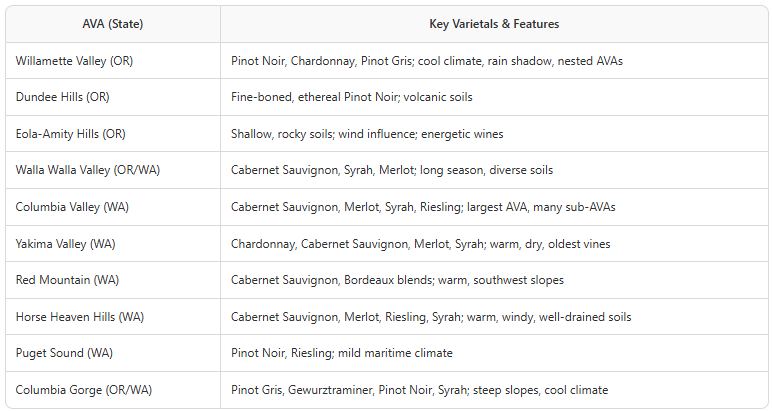
Willamette Valley AVA is the heart of Oregon wine, renowned for its cool climate and Pinot Noir. The region’s digital-forward wineries excel in DTC sales, wine club growth, and omnichannel strategies. Strict labeling laws and a high rate of certified sustainable vineyards reinforce Oregon’s reputation for quality and transparency.
Other Notable AVAs:
Dundee Hills: Volcanic soils, fine-boned Pinot Noir
Eola-Amity Hills: Wind-influenced, energetic wines
Walla Walla Valley (shared with Washington): Cabernet Sauvignon, Syrah, Merlot
Washington: Columbia Valley & Sub-AVAs
Columbia Valley AVA dominates Washington’s wine landscape, with sub-AVAs like Yakima Valley, Red Mountain, and Horse Heaven Hills producing acclaimed Cabernet Sauvignon, Merlot, and Syrah. The Sustainable WA program and dual certifications highlight the state’s commitment to environmental stewardship.
Key Digital Strategies:
Advanced e-commerce and CRM systems
Content-driven storytelling and SEO
Integrated social media and paid advertising campaigns
Wine Tourism & Experiential Marketing
Wine tourism is a major growth driver in the Pacific Northwest. Regional associations and tourism boards promote wine trails, tasting room experiences, and events through digital platforms. Virtual tastings and online events have become standard, expanding reach and deepening customer engagement.
Competitive Digital Strategies
The Pacific Northwest wine market is increasingly competitive, with small, quality-focused producers leveraging digital marketing, e-commerce, and storytelling to differentiate themselves. Partnerships with specialized digital agencies help wineries stay ahead of trends and refine their strategies for maximum impact.
Practical Recommendations for Winery Websites in 2026
Key Finding:
The most successful winery websites in 2026 will blend compelling storytelling, technical excellence, and data-driven personalization to convert visitors into loyal customers and brand advocates.
1. Invest in Personalization & AI
Implement AI-driven product recommendations and dynamic content.
Use virtual personas to optimize user journeys for different customer types.
2. Prioritize Mobile-First, Accessible Design
Ensure responsive layouts, large touch targets, and fast load times.
Comply with WCAG 2.2+ and integrate on-page accessibility controls.
3. Streamline E-Commerce & Wine Club Integration
Offer one-tap checkout, digital wallets, and guest checkout.
Integrate wine club management, flexible subscriptions, and loyalty programs.
4. Optimize for SEO & Local Search
Target region-specific and long-tail keywords.
Maintain up-to-date Google Business Profiles and encourage local reviews.
Create regular, engaging content (blogs, videos, educational resources).
5. Leverage Social Media & Virtual Experiences
Sell directly through Instagram and Facebook shops.
Host virtual tastings, live streams, and hybrid events.
Encourage user-generated content and influencer collaborations.
6. Ensure Regulatory Compliance
Use automated tools for shipping restrictions and age verification.
Clearly communicate compliance messaging throughout the purchase process.
7. Embrace Sustainable Web Practices
Optimize images and minimize heavy scripts.
Choose green hosting providers and highlight sustainability efforts.
Conclusion: The Future Is Digital, Sustainable, and Story-Driven
The Pacific Northwest wine industry is entering a new era—one defined by sustainability, premiumization, and digital innovation. For wineries, a modern website is the linchpin of success in 2026. It’s where your story comes alive, your brand stands out, and your customers become loyal advocates.
By embracing the latest web design trends, optimizing for mobile and accessibility, and weaving sustainability and authenticity into every digital touchpoint, Pacific Northwest wineries can capture new opportunities, delight customers, and secure their place in a dynamic, competitive market.
Summary Box:
Sustainability and premiumization are driving growth.
Digital transformation is essential for DTC sales and brand loyalty.
Personalized, accessible, and story-driven websites are the new standard.
Wineries that invest in their digital presence will lead the Pacific Northwest wine industry into a prosperous 2026 and beyond.
Ready to raise your glass (and your conversions)? Let’s create a digital tasting room as inviting as your vineyard - from your vineyard to your customers’ tables!🍇🍷
Let’s raise a glass to your success—both in wine and beyond! 🍷
As a web designer who specializes in the wine industry, I help wineries and vineyards create beautiful, effective websites and digital marketing strategies tailored to their unique stories and audiences. If you’re ready to boost your online presence and connect with new customers, let’s have a chat about how strategic & smart web design can take your winery to the next level!
Cheers to your success in the wine industry!
Maike
The Golden Square Design Studio
Where Vision Meets Innovation
Creating Stunning & Strategic Websites for Online Success