
Run an Educational Program on Your Winery Website in the Pacific Northwest
Welcome, winery owners, vineyard managers, and wine industry professionals in the Pacific Northwest!
Launching an educational program on your winery website in the Pacific Northwest is a powerful way to engage customers, build brand loyalty, and drive business growth. With a range of program formats, monetization models, and technical solutions available, wineries can tailor their educational offerings to fit their unique brand, audience, and business goals.
The Pacific Northwest—encompassing the renowned wine regions of Oregon and Washington—has emerged as a dynamic hub for wine production, innovation, and tourism. As a web designer specializing in the wine industry, I’ve seen firsthand how wineries can leverage digital education to stand out in a crowded market, deepen customer relationships, and create new revenue streams.
This comprehensive guide will walk you through everything you need to know about running an educational program on your winery website in the Pacific Northwest. We’ll explore the types of programs you can offer, whether to charge for them or not, the benefits and drawbacks of each approach, technical implementation strategies, and creative ideas to set your winery apart.
Table of Contents
Why Offer an Educational Program?
Understanding the Pacific Northwest Wine Landscape
Educational Program Options for Wineries
Virtual Tastings
Online Courses
Certification Programs
Food & Wine Pairing Guides
Vineyard Tours & Immersive Experiences
Interactive Modules & Gamification
Podcasts, Webinars, and Community Forums
Specialized and Advanced Programs
Paid vs. Unpaid Programs: Which Model is Right for You?
Monetization Strategies
Pros and Cons Table
Technical Implementation: How to Build Your Program Online
Choosing the Right Platform
Integrating with Your Website
User Experience and Conversion Optimization
Best Practices and Creative Ideas
Case Studies and Success Stories
Conclusion: Your Next Steps
Why Offer an Educational Program?
Wine is more than a beverage—it’s a story, a culture, and a journey. Today’s wine consumers, especially in the Pacific Northwest, are curious, engaged, and eager to learn.
By offering educational programs on your website, you can:
Build deeper relationships with customers by sharing your expertise and passion.
Differentiate your brand in a competitive market.
Drive direct and indirect revenue through course sales, wine club memberships, and increased wine sales.
Enhance your reputation as a leader in wine education and hospitality.
Attract new audiences—from wine tourists and enthusiasts to aspiring professionals.
Key Finding:
Wineries that invest in educational programs see increased customer loyalty, higher average order values, and stronger brand engagement.
Understanding the Pacific Northwest Wine Landscape
Major Wine Regions
The Pacific Northwest is home to some of the most celebrated wine regions in North America:

Target Demographics
Wine Tourists: Seeking immersive, educational experiences.
Eco-Conscious Consumers: Drawn to sustainable and organic practices.
Aspiring Professionals: Interested in wine careers and certifications.
Local Residents: Engaged in community events and lifestyle classes.
Regional Trends
Strong emphasis on sustainability and innovation.
Growing demand for experiential wine tourism and online education.
Collaborative culture among wineries, educators, and industry groups.
Market Opportunity:
While formal education is robust, there’s a gap in consumer-facing, winery-hosted online education—especially interactive, accessible, and multilingual offerings.
Educational Program Options for Wineries
Wineries worldwide are embracing a diverse array of educational formats.
Here’s a breakdown of the most effective options, with examples and best practices:
1. Virtual Wine Tastings
What:
Live, interactive tastings via Zoom or proprietary platforms, often featuring winemakers or sommeliers.
Features:
Guided tasting of shipped wine kits
Q&A sessions
Gamified elements (quizzes, competitions)
Example:
Vivant offers gamified tastings with real-time scoring and winemaker interaction.
Benefits:
High engagement
Scalable for remote audiences
Great for wine club recruitment
2. Online Educational Courses
What:
Structured courses (self-paced or instructor-led) covering wine basics, tasting techniques, regional styles, and more.
Features:
Video lessons, quizzes, downloadable resources
Beginner to advanced levels
Certificates of completion
Example:
Napa Valley Wine Academy offers Wine 101 to advanced WSET certification courses.
Benefits:
Flexible learning
Appeals to both enthusiasts and professionals
Can be monetized via one-time fees or subscriptions
3. Certification Programs
What:
Formal tracks leading to recognized credentials (e.g., WSET, Wine Scholar Guild).
Features:
Tiered levels (introductory to advanced)
Online or in-person delivery
Exams and official certificates
Example:
Wine Scholar Guild provides region-specific certifications with multimedia study materials.
Benefits:
Attracts serious learners and trade professionals
Enhances winery’s authority and credibility
4. Food & Wine Pairing Guides
What:
Digital guides, interactive modules, or live lessons on pairing wine with food.
Features:
Downloadable PDFs, videos, or live workshops
Themed tasting flights (e.g., “Flights & Bites”)
Suggested recipes and pairing tips
Example:
Wine Folly offers video content and downloadable pairing guides.
Benefits:
Adds value to wine sales
Encourages repeat purchases and experimentation
5. Vineyard Tours & Immersive Experiences
What:
Virtual or in-person tours of vineyards and wineries, often with behind-the-scenes access.
Features:
360° video tours
Live-streamed harvests or winemaking sessions
Interactive maps and storytelling
Example:
Wine Scholar Guild organizes immersive study tours as part of their Masters programs.
Benefits:
Deepens connection to the land and process
Appeals to wine tourists and enthusiasts
6. Interactive Modules & Gamification
What:
Quizzes, games, and multimedia content to reinforce learning and boost engagement.
Features:
Points, badges, leaderboards
Scenario-based learning (e.g., “Build Your Own Blend”)
Social sharing and competition
Example:
Vivant uses live questions and competitive elements during tastings.
Benefits:
Increases retention and repeat visits
Appeals to younger, tech-savvy audiences
7. Podcasts, Webinars, and Community Forums
What:
Ongoing education through audio/video content and online communities.
Features:
Expert interviews, panel discussions
Member forums for Q&A and networking
Regular webinars on trending topics
Example:
Wine For Normal People offers live classes, a podcast, and a private community.
Benefits:
Builds a loyal following
Provides ongoing touchpoints for engagement
8. Specialized and Advanced Programs
What:
Deep dives into viticulture, winemaking, business, or regional specializations.
Features:
Research projects, fieldwork, or master-level certifications
Guest lectures from industry experts
Advanced tasting and analysis
Example:
Institute of Masters of Wine offers a multi-stage program culminating in the MW title.
Benefits:
Attracts professionals and serious enthusiasts
Positions winery as a thought leader
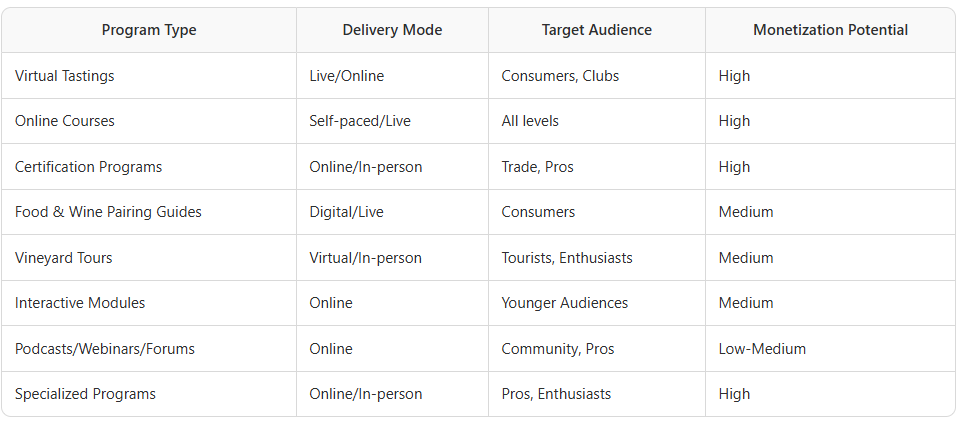
Summary Table: Educational Program Types
Paid vs. Unpaid Programs: Which Model is Right for You?
Monetization Strategies
Wineries have several options for monetizing educational programs:
1. Free Model
Purpose: Attract new users, build brand awareness, and generate leads.
How: Offer free webinars, basic courses, or downloadable guides.
Monetization: Upsell premium content, wine club memberships, or event tickets.
2. Paid Model
Purpose: Generate direct revenue and signal premium value.
How: Charge for courses, workshops, certifications, or exclusive events.
Monetization: One-time payments, subscriptions, or tiered memberships.
3. Freemium Model
Purpose: Combine broad reach with upsell potential.
How: Offer basic content for free, with advanced modules or experiences behind a paywall.
4. Corporate/Trade Training
Purpose: Serve hospitality, retail, or corporate clients.
How: Custom training programs, certifications, or private events.
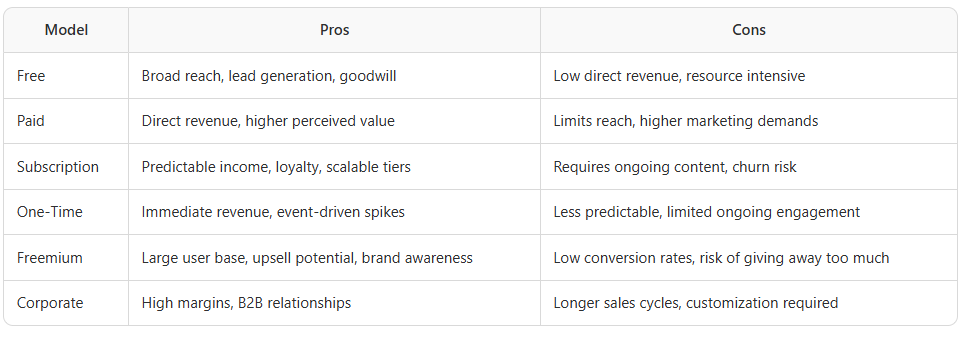
Pros and Cons Table
Key Finding:
The most successful wineries blend free and paid elements, using free content to attract and nurture leads, and premium offerings to drive revenue and loyalty.
Technical Implementation: How to Build Your Program Online
Choosing the Right Platform
Selecting the right technology is crucial for delivering a seamless, engaging educational experience. Here are the top options:

Video Hosting:
Vimeo and Wistia for professional, branded video delivery.
YouTube for broad reach (less control over branding/monetization).
Interactive Content:
H5P for quizzes, games, and multimedia modules.
iSpring Suite for converting PowerPoint to interactive lessons.
Integrating with Your Website
Subdomain Approach: Host your LMS on a subdomain (e.g., learn.yourwinery.com) for easy management.
Direct Embedding: Use iFrames or API integrations to display content within your main site.
WordPress Plugins: Seamless integration for WordPress-based sites (e.g., LearnDash, LifterLMS).
E-Commerce Integration:
Stripe, PayPal, or WooCommerce for payments.
Membership models for recurring revenue.
CRM & Marketing Automation:
Integrate with Salesforce, HubSpot, or winery-specific CRMs.
Use email marketing tools (MailChimp, ActiveCampaign) for course reminders and promotions.
User Experience and Conversion Optimization
Branded Interface: Custom themes to match your winery’s identity.
Mobile Responsiveness: Ensure all content is accessible on smartphones and tablets.
Accessibility: Comply with WCAG 2.1 standards for all users.
Engagement: Use quizzes, polls, and gamification to boost participation.
Lead Capture: Offer free mini-courses or downloadable guides in exchange for email sign-ups.
Upselling: Cross-promote wine club memberships, event tickets, or product sales within your educational content.
Analytics: Track user behavior, course completion, and conversion rates to optimize your offerings.
Best Practices and Creative Ideas
1. Blend Education with Experience
Pair virtual tastings with shipped wine kits and live Q&A.
Offer “behind-the-scenes” vineyard tours with interactive maps and video diaries.
Host seasonal workshops (e.g., “Harvest 101” or “Spring in the Vineyard”).
2. Leverage Gamification
Create leaderboards for quiz performance.
Award badges or certificates for course completion.
Run competitions (e.g., “Best Food & Wine Pairing Photo”).
3. Build Community
Launch a members-only forum or Facebook group for course participants.
Host regular webinars or “Ask the Winemaker” sessions.
Encourage user-generated content (e.g., tasting notes, reviews).
4. Personalize the Learning Journey
Use AI-driven recommendations to suggest courses or wines based on user preferences.
Offer learning paths (e.g., “Beginner to Connoisseur”).
Provide certificates or digital badges for milestones.
5. Expand Accessibility
Offer multilingual content (e.g., Spanish-language modules).
Create family-friendly or youth-oriented programs (e.g., non-alcoholic grape juice tastings, vineyard ecology workshops).
6. Integrate with Wine Club and E-Commerce
Bundle educational content with wine club memberships.
Offer discounts on wine purchases for course participants.
Use educational events to launch new releases or limited editions.
Case Studies and Success Stories
1. Wine Club Customization
Wineries offering flexible, Amazon Prime-like memberships with educational perks have seen average order values increase by 32% and rapid sell-outs of limited releases.
2. Freemium Educational Sites
Businesses combining free content (newsletters, interviews) with paid interactive courses have built profitable, seven-figure revenue streams and large customer bases.
3. Digital Marketing Impact
Educational campaigns have increased customer engagement, boosted online sales, and enhanced brand storytelling, with measurable business impact for participating wineries.
4. Academic Partnerships
Institutions like Chemeketa Community College and South Seattle College have successfully integrated hands-on learning with online modules, providing a model for wineries to blend in-person and digital education.
Conclusion: Your Next Steps
Running an educational program on your winery website in the Pacific Northwest is more than a marketing tactic—it’s a strategic investment in your brand, your customers, and your future.
By offering engaging, accessible, and value-driven educational experiences, you can:
Attract and retain loyal customers
Differentiate your winery in a competitive market
Generate new revenue streams
Strengthen your reputation as a leader in wine education
Ready to get started?
Here’s a quick action plan:
Define Your Goals: Who is your target audience? What do you want to achieve?
Choose Your Program Format: Start with one or two formats (e.g., virtual tastings + online courses) and expand as you grow.
Select Your Platform: Pick an LMS or e-learning solution that fits your needs and budget.
Develop Compelling Content: Focus on interactivity, storytelling, and real value.
Integrate and Launch: Seamlessly connect your educational program to your website and promote it through all channels.
Measure and Optimize: Use analytics to track engagement and refine your offerings.
Final Thought:
The Pacific Northwest wine industry is built on innovation, community, and a passion for excellence. By embracing digital education, your winery can lead the way—delighting customers, empowering staff, and shaping the future of wine in the region.
Need help building your winery’s digital presence?
As a web designer specializing in the Pacific Northwest wine industry, I can help you create a website and digital strategy that captures your get started!
If you’re a winery owner or manager in the Pacific Northwest and want expert help building a website that truly works, let’s connect. Focused simplicity always wins—and your story deserves to be told beautifully. 🍇🍷
Let’s raise a glass to your success—both in wine and beyond! 🍷
As a web designer who specializes in the wine industry, I help wineries and vineyards create beautiful, effective websites and digital marketing strategies tailored to their unique stories and audiences. If you’re ready to boost your online presence and connect with new customers, let’s have a chat about how strategic & smart web design can take your winery to the next level!
Cheers to your success in the wine industry!
Maike
The Golden Square Design Studio
Where Vision Meets Innovation
Creating Stunning & Strategic Websites for Online Success