
Is LinkedIn the Right Place for Your Winery Website in the Pacific Northwest?
Welcome, winery owners, vineyard managers, and wine industry professionals in the Pacific Northwest!
While LinkedIn is not the primary platform for direct-to-consumer wine marketing, it offers unique advantages for Pacific Northwest wineries seeking to build B2B relationships, recruit talent, and establish industry authority.
A strategic, multi-platform approach—leveraging LinkedIn for business development and other platforms for consumer engagement—delivers the best results.
Table of Contents
Introduction: The Digital Dilemma for Pacific Northwest Wineries
The Pacific Northwest Wine Industry: Unique Landscape and Challenges
Digital Marketing for Wineries: What Works?
LinkedIn: Platform Overview and Business Features
How Wineries Use LinkedIn: Real-World Examples
LinkedIn vs. Other Social Platforms: A Comparative Analysis
Is LinkedIn the Right Place for Your Winery Website?
Actionable Recommendations for Pacific Northwest Wineries
Conclusion: Crafting Your Winery’s Digital Future
1. Introduction: The Digital Dilemma for Pacific Northwest Wineries
As a web designer specializing in the wine industry, I’ve worked with dozens of wineries, vineyards, and wine-related businesses across the Pacific Northwest.
One question I hear time and again is:
“Should my winery invest in LinkedIn as part of our digital marketing strategy?”
The answer isn’t as simple as “yes” or “no.” The Pacific Northwest wine industry is unique—characterized by boutique, family-owned operations, a strong focus on sustainability, and a vibrant, collaborative community.
Your digital presence must reflect these values while reaching the right audience, whether that’s wine lovers, distributors, or industry partners.
In this comprehensive guide, I’ll break down the role of LinkedIn for wineries in Washington, Oregon, and Idaho, compare it to other platforms, and provide actionable insights to help you make the best decision for your business.
2. The Pacific Northwest Wine Industry: Unique Landscape and Challenges
Before diving into LinkedIn, it’s crucial to understand the context in which Pacific Northwest wineries operate.
Key Industry Statistics
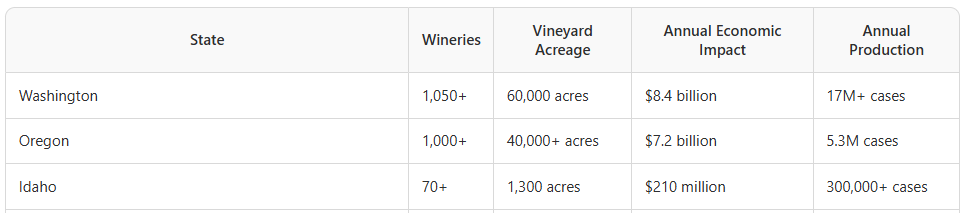
What Makes Pacific Northwest Wineries Unique?
Diverse Terroir: From the cool, misty Willamette Valley to the sun-drenched Columbia Valley, the region produces a wide range of varietals and wine styles.
Sustainability Leadership: Oregon leads the nation in certified sustainable vineyards; Washington and Idaho also emphasize organic and biodynamic practices.
Boutique Scale: Most wineries are small, family-owned, and produce limited quantities—fostering artisanal quality and direct-to-consumer (DTC) relationships.
Collaborative Spirit: Winemakers often share knowledge and resources, driving innovation and community.
Marketing Challenges
Brand Differentiation: Standing out in a crowded, boutique-driven market.
Limited Budgets: Small wineries often lack resources for large-scale campaigns.
Distribution Barriers: National/international distribution is tough; DTC sales are critical.
Consumer Education: Many consumers are less familiar with PNW wines compared to California or Europe.
Seasonal Tourism: Revenue can fluctuate with tourism cycles.
Digital Presence Needs
Professional, mobile-friendly websites
E-commerce integration
Active social media engagement
Email marketing and content creation
Storytelling and consumer education
3. Digital Marketing for Wineries: What Works?
Multi-Channel Strategy
Successful wineries use a blend of:
Website Optimization: SEO, e-commerce, and user experience are foundational.
Content Marketing: Blogs, wine education, and behind-the-scenes stories.
Social Media: Instagram and Facebook dominate for visual storytelling and consumer engagement.
Influencer & Paid Marketing: Influencer partnerships and PPC ads can outperform organic social alone.
Email Marketing: Personalized campaigns for wine clubs and offers.
Analytics: Data-driven decision-making is key.
What Content Performs Best?
Behind-the-scenes stories (harvest, winemaking, team)
Virtual tastings and events
User-generated content (customer photos, reviews)
Educational posts (pairings, tasting notes)
Collaborative campaigns (with local businesses or other wineries)
Common Mistakes
Overreliance on organic social media
Neglecting website optimization
Lack of personalization in emails
Ignoring analytics
Underutilizing emerging platforms (e.g., TikTok for younger audiences)
4. LinkedIn: Platform Overview and Business Features
Who Uses LinkedIn?
1.2 billion registered members (310 million monthly active users)
U.S. is the largest market (230M+ users)
Demographics:
50.6% Millennials (25–34)
24.5% Gen Z (18–24)
25% are managers, VPs, directors, or C-suite
55% from high-income households ($75K+)
What Is LinkedIn Good For?
B2B Lead Generation: 80% of B2B leads from social media come from LinkedIn.
Professional Networking: Connects businesses with distributors, retailers, event planners, and industry partners.
Recruitment: Attracts talent and highlights company culture.
Brand Authority: Thought leadership, sustainability messaging, and industry recognition.
Paid Advertising: Sponsored content, lead gen forms, and advanced targeting.
Content That Performs Well
Video: 24x more engagement than other formats.
Images: Double the comments of text-only posts.
Thought Leadership: Educational, non-promotional content is highly valued.
Company Updates: Awards, milestones, employee spotlights.
Limitations
Not a DTC Platform: Less effective for direct consumer sales or engagement.
Higher Ad Costs: Paid campaigns are more expensive but deliver higher-quality B2B leads.
Requires Consistency: Success depends on regular, high-quality posting.
5. How Wineries Use LinkedIn: Real-World Examples
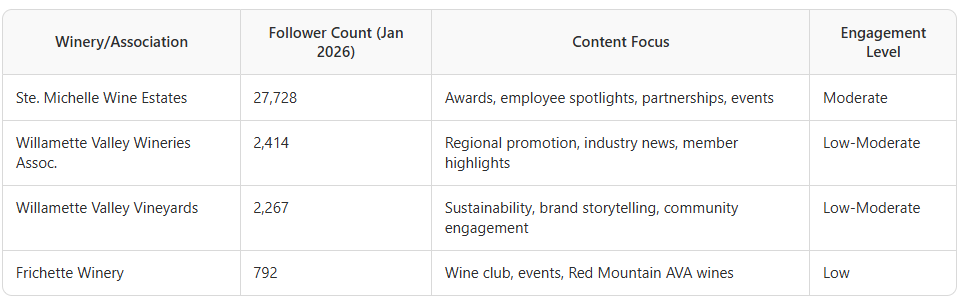
Pacific Northwest Winery LinkedIn Profiles
What Do These Wineries Post?
Brand Storytelling: Company history, mission, and unique selling points.
Employee Spotlights: Winemaker profiles, team achievements, company culture.
Industry Partnerships: Announcements, event participation, thought leadership.
Event Promotion: Tastings, webinars, industry gatherings.
Sustainability Initiatives: Community involvement and eco-friendly practices.
Engagement Insights
Larger brands and associations (e.g., Ste. Michelle, WVWA) see moderate engagement, especially on posts about awards, employee recognition, and major events.
Smaller wineries typically see limited engagement—often just a handful of likes or comments per post.
Success Stories
Ste. Michelle Wine Estates: Built brand prestige, highlighted winemaker achievements, and promoted professional development, reinforcing its position as a leading employer and innovator.
Willamette Valley Wineries Association: Unified and promoted the region’s wineries, shared educational content, and advocated for the industry.
Challenges
Limited Consumer Reach: LinkedIn’s professional focus means wineries struggle to reach end consumers compared to Instagram and Facebook.
Content Adaptation: Tailoring content for a business audience can be resource-intensive.
Underutilized Features: Tools like LinkedIn Events and Showcase Pages are often overlooked.
6. LinkedIn vs. Other Social Platforms: A Comparative Analysis
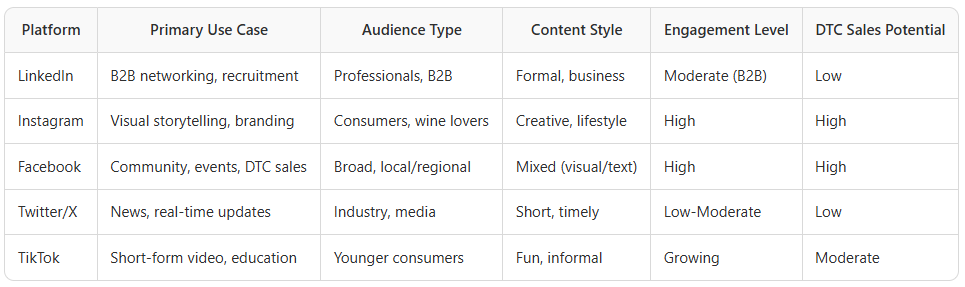
Platform Usage Patterns
Key Insights
Instagram and Facebook are the go-to platforms for consumer engagement, visual storytelling, and DTC sales.
LinkedIn excels at B2B networking, industry partnerships, and recruitment.
Content must be tailored to each platform’s audience and style for maximum impact.
7. Is LinkedIn the Right Place for Your Winery Website?
When LinkedIn Makes Sense
You want to build B2B relationships: Distributors, retailers, event planners, and hospitality professionals are active on LinkedIn.
You’re recruiting talent: LinkedIn is the top platform for professional recruitment in the wine industry.
You want to establish industry authority: Sharing thought leadership, sustainability initiatives, and company milestones builds credibility.
You’re seeking partnerships: Collaborations with other wineries, local businesses, or industry organizations often start on LinkedIn.
When LinkedIn Is Less Effective
You’re focused on DTC sales: Instagram, Facebook, and your website’s e-commerce platform are far more effective for reaching and converting consumers.
You have limited resources: If you can only manage one or two platforms, prioritize those with the highest ROI for your goals (usually Instagram and Facebook for consumer-facing wineries).
You’re a very small operation: The time and effort to maintain a LinkedIn presence may not yield significant returns unless you’re actively pursuing B2B opportunities.
The Multi-Platform Imperative
Key Finding:
Pacific Northwest wineries achieve the best results with a multi-platform approach—using LinkedIn for business development and other platforms for consumer engagement.
8. Actionable Recommendations for Pacific Northwest Wineries
1. Define Your Goals
B2B Focus: Use LinkedIn to connect with distributors, retailers, event planners, and industry partners.
DTC Focus: Prioritize Instagram, Facebook, and your website’s e-commerce features.
2. Optimize Your LinkedIn Company Page
Complete all profile sections (logo, banner, description, specialties, website link).
Highlight your unique story, sustainability practices, and team.
Post regularly (at least weekly) to maintain visibility.
3. Share the Right Content
For LinkedIn:
Company milestones, awards, and news
Employee spotlights and team culture
Industry insights and thought leadership
Partnership announcements
Sustainability and community initiatives
For Instagram/Facebook:
Vineyard and winery photography
Behind-the-scenes stories
Event promotions and wine releases
User-generated content and reviews
4. Leverage LinkedIn Features
Use LinkedIn Events to promote industry webinars, tastings, or educational sessions.
Encourage employees to share and engage with company posts.
Consider LinkedIn Ads for targeted B2B campaigns (e.g., trade events, wholesale partnerships).
5. Integrate Your Website
Ensure your website is linked from your LinkedIn page and vice versa.
Use your website as the hub for all digital activity—LinkedIn should drive traffic to your site for more information, contact, or B2B inquiries.
6. Monitor and Adjust
Track engagement metrics (views, likes, comments, shares, website clicks).
Use LinkedIn Analytics to refine your content strategy.
Adjust your approach based on what resonates with your target audience.
9. Conclusion: Crafting Your Winery’s Digital Future
Is LinkedIn the right place for your winery website in the Pacific Northwest?
The answer depends on your business goals.
For B2B growth, recruitment, and industry authority: LinkedIn is a valuable tool. It connects you with decision-makers, builds your professional reputation, and opens doors to partnerships and talent.
For direct-to-consumer sales and brand storytelling: Focus your energy on Instagram, Facebook, and your own website. These platforms deliver higher engagement and sales potential with wine lovers and tourists.
The most successful wineries in the Pacific Northwest don’t choose one platform—they build a digital ecosystem.
Your website is the foundation. Social media channels, including LinkedIn, are the bridges that connect you to different audiences. By understanding the strengths and limitations of each platform, you can craft a digital strategy that reflects your winery’s unique story, values, and ambitions.
Final Thought:
In the ever-evolving world of wine marketing, adaptability is your greatest asset. Use LinkedIn to grow your business network and industry influence, but don’t neglect the platforms where your customers live, share, and buy. The right mix will help your winery flourish—online and in the glass.
Need help building your winery’s digital presence?
As a web designer specializing in the Pacific Northwest wine industry, I can help you create a website and digital strategy that captures your get started!
If you’re a winery owner or manager in the Pacific Northwest and want expert help building a website that truly works, let’s connect. Focused simplicity always wins—and your story deserves to be told beautifully. 🍇🍷
Let’s raise a glass to your success—both in wine and beyond! 🍷
As a web designer who specializes in the wine industry, I help wineries and vineyards create beautiful, effective websites and digital marketing strategies tailored to their unique stories and audiences. If you’re ready to boost your online presence and connect with new customers, let’s have a chat about how strategic & smart web design can take your winery to the next level!
Cheers to your success in the wine industry!
Maike
The Golden Square Design Studio
Where Vision Meets Innovation
Creating Stunning & Strategic Websites for Online Success