
Wine & Website Design in the Pacific Northwest - 2025 Review
Welcome, winery owners, vineyard managers, and wine industry professionals in the Pacific Northwest!
As a web designer specializing in the wine industry, I’ve witnessed firsthand how the Pacific Northwest (PNW) has become a powerhouse of innovation—not just in the vineyard, but online. In 2025, your website is your tasting room, your storefront, and your story—all rolled into one.
Whether you’re a family-owned vineyard in the Willamette Valley, a luxury estate in Walla Walla, or a boutique operation in Idaho’s Snake River Valley, your digital presence is the key to unlocking new markets, building loyal wine club communities, and weathering the challenges of a rapidly changing industry.
This review is crafted for winery owners, vineyard managers, and wine business leaders who want to understand how web design can drive growth, foster connection, and future-proof their brand in the Pacific Northwest.
2025 Pacific Northwest Wine Industry Snapshot
The Digital Imperative: Why Wineries Must Invest in Web Design
2025 Web Design Trends for Wineries
Case Studies: Standout Winery Websites in the Pacific Northwest
Solving Industry Challenges with Digital Solutions
Best Practices: Building a Winery Website That Works
The ROI of Great Web Design: Measurable Outcomes
Looking Ahead: The Future of Wine & Web in the PNW
Conclusion: Your Next Steps
1. 2025 Pacific Northwest Wine Industry Snapshot
Before diving into design, let’s set the stage with a look at the current state of the PNW wine industry:
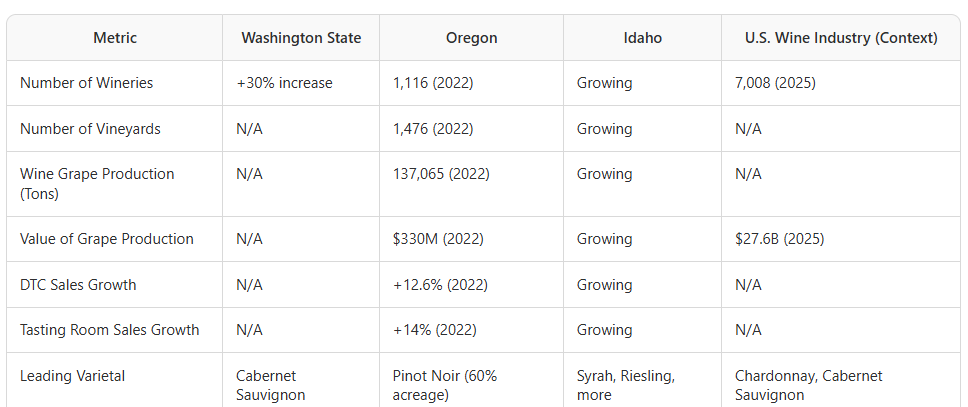
Key Trends:
Growth: Both Washington and Oregon are seeing record numbers of wineries and vineyards, with Idaho emerging as a rising star.
Direct-to-Consumer (DTC): DTC sales, including wine clubs and tasting rooms, are rebounding and growing faster than traditional distribution.
Premiumization & Sustainability: Consumers are seeking premium, authentic, and sustainable wines.
Digital Transformation: Wineries are investing in digital marketing, e-commerce, and data-driven strategies to reach new audiences and drive sales.
2. The Digital Imperative: Why Wineries Must Invest in Web Design
The New Tasting Room Is Online
The days when a simple website sufficed are long gone. In 2025, your website is often the first—and sometimes only—touchpoint for customers, distributors, and media. It’s where stories are told, wine is sold, and relationships are built.
Why is web design so critical for wineries today?
Competition: The PNW faces stiff competition from California, Europe, and emerging regions. A compelling website helps you stand out.
DTC Sales: With DTC channels booming, your website must convert visitors into buyers and club members.
Younger Demographics: Millennials and Gen Z expect seamless, mobile-first digital experiences.
Sustainability & Storytelling: Consumers want to know your story, values, and practices—your website is the best place to share them.
Virtual Engagement: Virtual tastings, tours, and events are now standard, expanding your reach beyond the tasting room.
Key Finding:
Wineries that invest in modern, user-centric web design are seeing measurable gains in traffic, engagement, wine club retention, and DTC sales.
3. 2025 Web Design Trends for Wineries
Let’s explore the design trends and best practices shaping the most successful winery websites in the Pacific Northwest:
3.1. Handcrafted, Brand-Driven Visuals
Custom Layouts & Typography: Bespoke designs that reflect your unique story and terroir.
Immersive Imagery & Video: Full-width hero images, video backgrounds, and subtle animations evoke the ambiance of your vineyard.
3.2. Mobile-First, Responsive Design
Seamless Experience: Optimized for smartphones and tablets, with fast load times and touch-friendly navigation.
3.3. Integrated E-Commerce
Direct-to-Consumer Focus: Robust online stores with age verification, shipping compliance, and easy checkout.
Personalized Recommendations: AI-driven tools suggest wines based on user preferences.
3.4. Wine Club Integration
Flexible Memberships: Customizable shipments, easy online management, and dedicated member portals.
3.5. Sustainability Storytelling
Eco-Friendly Design: Natural color palettes, organic textures, and dedicated sustainability sections.
Certification Badges: Prominent display of organic, biodynamic, or B Corp certifications.
3.6. Virtual & Augmented Reality
Virtual Tours: 360-degree vineyard and winery tours for remote visitors.
AR Labels: Interactive labels that tell your story via smartphone.
3.7. Accessibility
Inclusive Design: WCAG compliance, alt text, keyboard navigation, and screen reader compatibility.
3.8. Conversion Optimization
Clear Calls-to-Action: Prominent “Shop,” “Join the Club,” and “Book a Tasting” buttons.
Trust Signals: High-quality imagery, testimonials, and transparent policies.
4. Case Studies: Standout Winery Websites in the Pacific Northwest
Let’s spotlight 12 wineries across Washington, Oregon, and Idaho whose websites set the standard for digital excellence in 2025:

Case Study Highlights
1. Chateau Ste. Michelle (WA)
Design: Clean, image-driven homepage with immersive vineyard photography and elegant typography.
Features: Virtual tastings, interactive events calendar, robust e-commerce, and multiple wine club tiers.
Takeaway: Sets the bar for luxury and user experience.
2. Grosgrain Vineyards (WA)
Design: Minimalist, modern, with bold fonts and a muted palette.
Features: Blog sharing winemaking experiments, small-batch e-commerce, and integrated event booking.
Takeaway: Appeals to experimental wine lovers and fosters community.
3. Argyle Winery (OR)
Design: Parallax scrolling, high-res estate imagery, and subtle animations.
Features: Virtual tasting kits, live-streamed events, and legacy storytelling.
Takeaway: Blends tradition with digital innovation.
4. Left Coast Estate (OR)
Design: Earthy tones, video banner, and interactive estate map.
Features: Sustainability focus, virtual farm tours, and farm-to-table event booking.
Takeaway: Connects visitors to the land and family story.
5. Domaine Serene (OR)
Design: Dark, cinematic visuals and video loops.
Features: Allocation-only shop, virtual cellar tours, and sommelier-led tastings.
Takeaway: Exudes exclusivity and prestige.
6. HAT Ranch Winery (ID)
Design: Warm, inviting imagery and approachable layout.
Features: Idaho wine education, community events, and simple e-commerce.
Takeaway: Makes wine accessible and educational.
7. Koenig Vineyards (ID)
Design: Elegant gold accents and vineyard photography.
Features: Virtual tastings, European heritage storytelling, and gift packages.
Takeaway: Marries tradition with modern digital engagement.
8. AniChe Cellars (WA)
Design: Playful, artistic, and vibrant.
Features: Women-led storytelling, recipes blog, and themed tastings.
Takeaway: Celebrates creativity and artisan winemaking.
9. Snake River Winery (ID)
Design: Regional landscapes and welcoming palette.
Features: Educational resources, regional wine selections, and gift options.
Takeaway: Focuses on local pride and education.
10. L’Ecole No. 41 (WA)
Design: Classic schoolhouse motifs and a mix of photography and illustration.
Features: Virtual tastings, historic storytelling, and comprehensive e-commerce.
Takeaway: Honors heritage while embracing digital tools.
11. Goose Ridge Estate (WA)
Design: Modern, clean layout with large images.
Features: Virtual tasting kits, multi-generational story, and seasonal promotions.
Takeaway: Balances accessibility with sophistication.
12. Huston Vineyards (ID)
Design: Natural colors and vineyard photography.
Features: Sustainability blog, organic wine focus, and event calendar.
Takeaway: Appeals to eco-conscious consumers.
5. Solving Industry Challenges with Digital Solutions
The PNW wine industry faces unique challenges in 2025.
Here’s how smart web design and digital tools are helping wineries overcome them:
5.1. Standing Out in a Crowded Market
Immersive Storytelling: High-quality visuals, video, and interactive timelines differentiate your brand.
SEO Optimization: Ensures your winery is discoverable by wine lovers searching online.
5.2. Navigating DTC Sales & Shipping
Integrated Compliance Tools: Platforms like Commerce7 automate shipping compliance, reducing legal risks.
Transparent Checkout: Clear shipping restrictions and costs build trust and reduce cart abandonment.
5.3. Overcoming Shipping & Logistics Hurdles
Automated Shipping Calculators: Real-time cost estimates and delivery timelines set accurate expectations.
CRM Integration: Enables targeted shipping promotions and follow-ups, boosting repeat purchases.
5.4. Attracting Younger Wine Lovers
Mobile-First Design: Essential for engaging Millennials and Gen Z.
Short-Form Video & Social Commerce: TikTok, Instagram Reels, and in-app shopping drive engagement and sales.
5.5. Communicating Sustainability
Eco-Friendly Design: Natural palettes and textures reinforce your green credentials.
Certification Badges: Prominently display organic, biodynamic, or B Corp status.
5.6. Virtual Tastings & Experiences
360° Virtual Tours: Let remote visitors explore your property.
Live Virtual Tastings: Interactive, shoppable events expand your reach.
5.7. Wine Club Retention
Smart Segmentation: Personalized offers and communications keep members engaged.
Automated Campaigns: Email and SMS automations drive retention and upsells.
5.8. Managing Seasonal Fluctuations
Data Capture & CRM: Collect visitor data during peak seasons for targeted off-season marketing.
Event Marketing: Promote virtual and in-person events to maintain year-round engagement.
6. Best Practices: Building a Winery Website That Works
6.1. Design for Your Brand
Custom Visuals: Use professional photography and video to showcase your vineyard, people, and process.
Consistent Typography & Color: Reflect your brand’s personality—luxury, rustic, modern, or playful.
6.2. Prioritize User Experience
Mobile-First: Ensure your site looks and works great on all devices.
Clear Navigation: Make it easy to find wines, join the club, or book a tasting.
Fast Load Times: Optimize images and code for speed.
6.3. Integrate Seamless E-Commerce
Age Verification: Comply with legal requirements.
Easy Checkout: Minimize steps and offer guest checkout.
Personalized Recommendations: Use AI tools to suggest wines.
6.4. Tell Your Story
About Pages: Share your history, values, and team.
Sustainability: Dedicate space to your eco-friendly practices.
Multimedia: Use video, audio, and interactive elements.
6.5. Engage and Retain
Wine Club Integration: Offer flexible memberships and easy management.
Exclusive Content: Provide members with special access, virtual events, and behind-the-scenes stories.
Automated Marketing: Use email and SMS to nurture relationships.
6.6. Embrace Emerging Tech
AR/VR: Experiment with virtual tours and interactive labels.
AI Personalization: Tailor recommendations and content to each visitor.
6.7. Ensure Accessibility
WCAG Compliance: Make your site usable for everyone.
Alt Text & Keyboard Navigation: Support users with disabilities.
7. The ROI of Great Web Design: Measurable Outcomes
Investing in your website isn’t just about looking good—it’s about driving real business results.
Here are some success stories and metrics from the region:
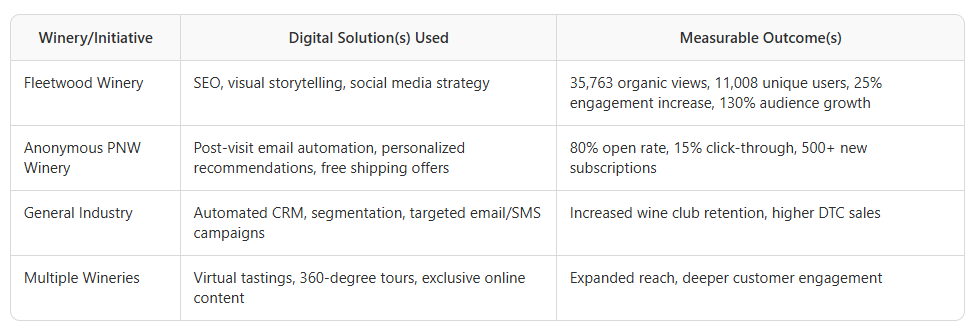
Key Takeaway:
Wineries that invest in modern web design and digital marketing see higher traffic, more wine club sign-ups, increased DTC sales, and stronger customer loyalty.
8. Looking Ahead: The Future of Wine & Web in the PNW
The digital landscape is evolving rapidly.
Here’s what’s on the horizon for wine and web in the Pacific Northwest:
AI-Driven Personalization: Expect smarter recommendations, dynamic content, and predictive analytics.
AR/VR Expansion: More immersive virtual tours, tastings, and interactive packaging.
Sustainability as Standard: Eco-friendly design and transparent storytelling will become table stakes.
Omnichannel Integration: Seamless experiences across web, mobile, social, and in-person touchpoints.
Data-Driven Decision Making: Wineries will leverage analytics to optimize marketing, sales, and customer engagement.
9. Conclusion: Your Next Steps
The Pacific Northwest wine industry is at a digital crossroads. The wineries that thrive in 2025 and beyond will be those that embrace the power of exceptional web design—not just as a marketing tool, but as a core part of their business strategy.
If you’re a winery owner, vineyard manager, or wine business leader, here’s what you can do:
Audit Your Website: Is it mobile-friendly, fast, and easy to navigate? Does it tell your story and drive sales?
Invest in Professional Design: Work with designers who understand both wine and digital best practices.
Embrace E-Commerce: Make it easy for customers to buy, join, and engage—wherever they are.
Tell Your Story: Use visuals, video, and narrative to connect emotionally with your audience.
Leverage Data: Use analytics to understand your customers and optimize your digital strategy.
Stay Ahead: Keep an eye on emerging trends—AR, AI, sustainability, and more.
Final Thought:
In the Pacific Northwest, the future of wine is digital. Your website is your vineyard’s front door to the world—make it as inviting, authentic, and memorable as the wines you craft.
Ready to raise your glass (and your conversions)? Let’s create a digital tasting room as inviting as your vineyard - from your vineyard to your customers’ tables!🍇🍷
Let’s raise a glass to your success—both in wine and beyond! 🍷
As a web designer who specializes in the wine industry, I help wineries and vineyards create beautiful, effective websites and digital marketing strategies tailored to their unique stories and audiences. If you’re ready to boost your online presence and connect with new customers, let’s have a chat about how strategic & smart web design can take your winery to the next level!
Cheers to your success in the wine industry!
Maike
The Golden Square Design Studio
Where Vision Meets Innovation
Creating Stunning & Strategic Websites for Online Success