
Winery Website Summer Inspiration in the Pacific Northwest
Welcome, winery owners, vineyard managers, and wine industry professionals in the Pacific Northwest!
In 2026, the most successful Pacific Northwest winery websites blend immersive summer visuals, authentic storytelling, and cutting-edge web design trends—creating digital experiences as memorable as a sunset tasting among the vines.
Introduction: Designing for the Soul of Pacific Northwest Wine Country
As a web designer specializing in winery and vineyard websites, I’ve spent the last decade helping Pacific Northwest wine businesses translate their unique terroir, stories, and summer magic into digital experiences that captivate and convert. The summer season is the heartbeat of PNW wine country—when rolling hills burst into green, lavender fields perfume the air, and tasting rooms buzz with visitors seeking the perfect glass under golden sunsets.
In 2026, winery websites are more than digital brochures—they’re immersive, interactive gateways that invite guests to experience the region’s beauty, book unforgettable events, and join vibrant wine communities. This post is a deep dive into the latest design inspiration, best practices, and actionable strategies for creating winery websites that shine in the summer and beyond.
Table of Contents
The Pacific Northwest Summer Wine Experience
2026 Web Design Trends for Winery Websites
Showcase: Outstanding PNW Winery Websites
Designing Immersive Summer Hero Sections
Color, Typography, and Visual Identity
UX/UI Best Practices: Booking, E-Commerce, and More
Storytelling, Brand, and Community
Accessibility, Sustainability, and SEO for Summer
Practical Tips for Your Summer Website Refresh
Conclusion: Bringing Summer to Life Online
The Pacific Northwest Summer Wine Experience
A Region Defined by Summer
The Pacific Northwest—encompassing Oregon’s Willamette Valley, Washington’s Columbia Valley, Walla Walla, Yakima Valley, and the Puget Sound AVA—is a tapestry of microclimates, landscapes, and wine traditions. Summer here is a sensory feast:
Rolling green vineyards stretch beneath snow-capped peaks like Mount Hood and Mount Rainier.
Lavender fields and wildflowers border vineyard rows, filling the air with color and fragrance.
Sunset tastings and open-air concerts transform wineries into community hubs.
Art installations, chef dinners, and wine festivals dot the calendar, drawing visitors from around the world.
Signature Summer Events & Experiences
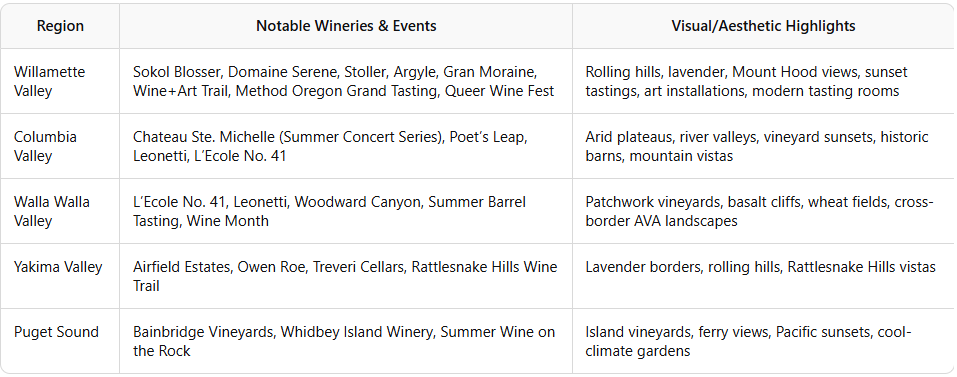
Key Finding:
The PNW’s summer wine scene is defined by immersive outdoor experiences, vibrant landscapes, and a blend of rustic charm and modern hospitality.
2026 Web Design Trends for Winery Websites
What’s Defining Winery Web Design in 2026?
The digital landscape for wineries has evolved rapidly. In 2026, the best winery websites are:
Immersive and cinematic: Hero sections with video backgrounds and parallax scrolling.
Story-driven: Authentic narratives and visual storytelling.
Mobile-first and accessible: Seamless on any device, compliant with WCAG 2.2+.
Personalized and interactive: AI-driven content, micro-animations, and dynamic recommendations.
Optimized for local search and summer traffic: Smart SEO, structured data, and event integration.
Top Trends at a Glance
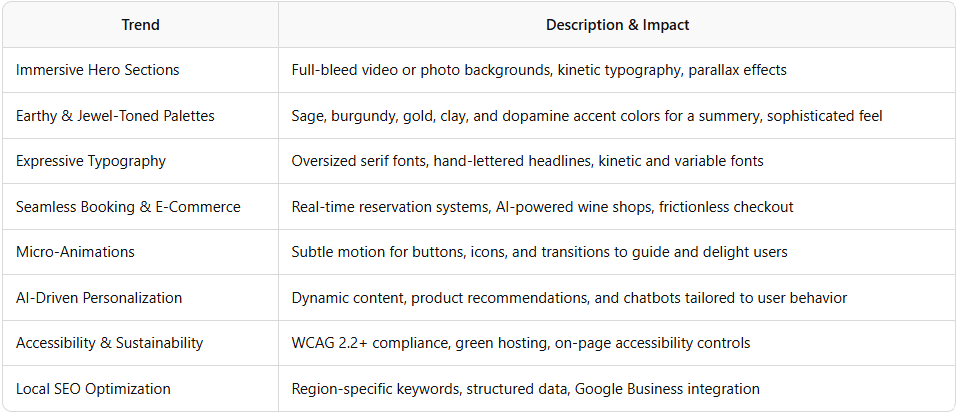
Showcase: Outstanding PNW Winery Websites
Let’s explore real-world examples of Pacific Northwest wineries that are setting the standard for summer-inspired web design in 2026.
1. Domaine Serene (Oregon)
Panoramic summer photography: Lush Willamette Valley vistas, golden hour light, and vibrant event banners.
Summer campaign pages: Rotating banners for seasonal tastings and outdoor events.
Streamlined booking: Mobile-friendly, real-time reservation system.
Storytelling e-commerce: Large product images, intuitive navigation, and summer wine bundles.
2. Maysara Winery (Oregon)
Biodynamic branding: Earthy palettes, organic shapes, and summer garden imagery.
Seasonal storytelling: Guided tours, garden-to-table menus, and event photography.
Accessible booking: Inclusive, family- and pet-friendly reservation flows.
3. Bledsoe Family Winery (Washington)
Dedicated summer landing pages: Vineyard picnics, outdoor tastings, and event highlights.
E-commerce focus: Summer wine bundles, sunlit product images, and easy checkout.
Personal storytelling: Winemaker narratives connect visitors to the land and season.
4. Left Coast Estate (Oregon)
Immersive visuals: Drone footage, wildflower meadows, and outdoor tasting patios.
Family storytelling: Narratives about stewardship and summer farming.
Seasonal e-commerce: Picnic kits and summer wine packs featured prominently.
5. AniChe Cellars (Washington)
Bold summer colors: Playful typography and women-led branding.
Event landing pages: Summer concerts, outdoor tastings, and integrated ticketing.
Community focus: Wine club perks and summer-exclusive events.
6. Greenwing (Oregon, 2025 Launch)
Summer launch campaign: Bright imagery, tasting notes evoking seasonal fruits.
Mobile e-commerce: Quick-buy options for new releases.
Video storytelling: Winemaker interviews and campaign videos.
Key Takeaway:
These wineries excel by blending immersive summer visuals, authentic storytelling, and seamless user experiences—setting the bar for digital engagement in the wine industry.
Designing Immersive Summer Hero Sections
The Power of the First Impression
Your website’s hero section is your digital front door. In summer, it should instantly transport visitors to your vineyard—evoking the warmth, color, and vibrancy of the season.
Best Practices for Summer Hero Sections
Full-bleed video backgrounds: Show grape clusters in the sun, guests at sunset tastings, or drone flyovers of rolling vineyards.
Cinematic photography: Use golden hour light, blooming lavender, and panoramic views.
Kinetic typography: Oversized, animated headlines that move or shift as users scroll.
Parallax effects: Foreground elements (like grapevines or wine glasses) move at different speeds for depth and immersion.
Clear, compelling CTAs: “Book Your Summer Tasting,” “Explore Summer Events,” or “Shop Summer Releases.”
Example: Domaine Serene
Their homepage opens with a sweeping video of the Willamette Valley at sunset, overlaid with a bold serif headline and a single, inviting CTA. As you scroll, parallax effects reveal summer events and wine releases, drawing you deeper into the experience.
Color, Typography, and Visual Identity
Summer Color Palettes: Earthy, Jewel-Toned, and Vibrant
The best winery websites in 2026 use color to evoke both place and season:
Earth tones: Clay, soil, wood, and sage green reflect the land.
Jewel tones: Burgundy, emerald, and navy add sophistication.
Gold accents: For warmth and luxury.
Dopamine brights: Neon pinks or electric blues as subtle accents for CTAs or micro-interactions.
Example Palette

Typography: Expressive, Hand-Lettered, and Oversized
Serif fonts (Garamond, Caslon) for tradition and elegance.
Hand-lettered styles for warmth and personality.
Oversized headlines for impact, often animated or kinetic.
Variable fonts that shift in weight or style based on user interaction.
Example: AniChe Cellars
Their site uses bold, hand-drawn headlines in summer colors, paired with clean, readable body text—creating a playful yet sophisticated vibe.
UX/UI Best Practices: Booking, E-Commerce, and More
Seamless Booking Systems
Real-time availability: Users can see open slots for tastings or events.
Mobile-first design: Over 70% of traffic is mobile—booking must be effortless on any device.
Integrated calendars: Highlight summer events, concerts, and special releases.
E-Commerce Wine Shops
Robust filtering: By varietal, vintage, or summer bundles.
AI-powered recommendations: Suggest wines based on user preferences or browsing history.
Frictionless checkout: Digital wallets, guest checkout, and minimal form fields.
Wine Club & Membership Pages
Story-driven content: Convey exclusivity, community, and summer perks.
Easy sign-up: One-click join, clear benefits, and summer event invitations.
Micro-Animations & Parallax Scrolling
Button hover effects: Subtle color shifts or bounces.
Animated icons: Grapes, glasses, or sun motifs that move as users scroll.
Scroll-triggered transitions: Content fades or slides in, guiding the user journey.
Example: Left Coast Estate
Their e-commerce section features animated add-to-cart buttons, parallax scrolling through summer picnic kits, and a seamless, mobile-optimized checkout.
Free Guide: Winery Website Conversion Checklist
Storytelling, Brand, and Community
Authentic Narratives
Winemaker stories: Videos or written profiles connect visitors to the people behind the wine.
Sustainability and stewardship: Highlight organic practices, biodiversity, and summer farming activities.
Event recaps: Photo galleries and videos from summer concerts, dinners, and festivals.
Building Community
Wine club exclusives: Early access to summer releases, members-only events, and behind-the-scenes content.
User-generated content: Encourage guests to share photos from their summer visits, featured on the site or social feeds.
Blog and resources: Summer pairing guides, event previews, and educational content.
Example: Maysara Winery
Their site weaves stories of family, land, and summer abundance—inviting visitors to become part of the winery’s ongoing narrative.
Accessibility, Sustainability, and SEO for Summer
Accessibility (WCAG 2.2+)
Screen reader support: All content is navigable and understandable.
Keyboard navigation: Users can access all features without a mouse.
High-contrast modes: On-page controls for font size and color contrast.
Alt text for images: Especially important for immersive summer photography.
Sustainability
Optimized images and lean code: Faster load times, lower energy use.
Green hosting: Renewable energy-powered servers.
Transparent communication: Share your sustainability efforts on the site.
Local SEO Optimization
Region-specific keywords: “Best Willamette Valley wineries for summer,” “Walla Walla sunset tastings.”
Google Business Profile: Up-to-date hours, events, and reviews.
Structured data: Mark up events, products, and reviews for enhanced search visibility.
Content marketing: Regular blog posts about summer events, behind-the-scenes videos, and educational resources.
Example: Bledsoe Family Winery
Their site ranks highly for “Walla Walla summer wine events” thanks to structured data, local reviews, and regularly updated event calendars.
Practical Tips for Your Summer Website Refresh
1. Audit Your Visuals
Update hero images and banners with current summer photography.
Add or refresh video backgrounds to showcase the season.
2. Refresh Your Color Palette
Incorporate earthy and jewel-toned colors for a summery, sophisticated feel.
Use gold or dopamine brights for CTAs and micro-interactions.
3. Enhance Storytelling
Add new winemaker stories, event recaps, and summer pairing guides.
Use kinetic typography and parallax effects to guide users through your narrative.
4. Upgrade UX/UI
Ensure your booking and e-commerce systems are mobile-first and frictionless.
Integrate event calendars and wine club sign-ups with clear summer perks.
5. Prioritize Accessibility & Sustainability
Test your site for WCAG 2.2+ compliance.
Optimize images and consider green hosting options.
6. Optimize for Local SEO
Update your Google Business Profile and encourage summer visitor reviews.
Use structured data for events and products.
Publish regular, regionally focused content.
Conclusion: Bringing Summer to Life Online
The Pacific Northwest’s summer wine country is a place of beauty, community, and sensory delight. In 2026, your winery website can—and should—capture that magic, inviting visitors to experience your story, your land, and your wines from the very first click.
By embracing immersive visuals, authentic storytelling, and the latest web design trends, you’ll create a digital presence that not only drives summer traffic and bookings but also builds lasting relationships with your guests and club members.
If you’re ready to refresh your winery website for the summer season, let’s collaborate to bring your unique vision to life—online and in the glass.
Ready to elevate your winery’s digital presence this summer?
Contact me for a complimentary website audit and personalized design recommendations tailored to your brand, your region, and your summer goals.
Let’s raise a glass to your success—both in wine and beyond! 🍷
As a web designer who specializes in the wine industry, I help wineries and vineyards create beautiful, effective websites and digital marketing strategies tailored to their unique stories and audiences. If you’re ready to boost your online presence and connect with new customers, let’s have a chat about how strategic & smart web design can take your winery to the next level!
Cheers to your success in the wine industry!
Maike
The Golden Square Design Studio
Where Vision Meets Innovation
Creating Stunning & Strategic Websites for Online Success